Applied Mathematics and Mechanics (English Edition) ›› 2026, Vol. 47 ›› Issue (6): 1279-1300.doi: https://doi.org/10.1007/s10483-026-3390-8
Previous Articles Next Articles
Meiling LI1, Yingjing QIAN1,†( ), Wenxue CHEN1, Yan SHEN1, Yue LIU2
Received:2025-12-27
Revised:2026-03-26
Online:2026-06-18
Published:2026-06-18
Contact:
Yingjing QIAN, E-mail: candiceqyj@163.comSupported by:2010 MSC Number:
Meiling LI, Yingjing QIAN, Wenxue CHEN, Yan SHEN, Yue LIU. Asteroid impact trajectory based on Jupiter-perturbed Sun-Earth planar bicircular restricted four-body problem invariant manifolds. Applied Mathematics and Mechanics (English Edition), 2026, 47(6): 1279-1300.
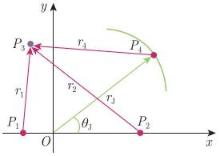
Fig. 1
Planar bicircular model in the dimensionless Sun-Earth rotating coordinate frame (color online)"
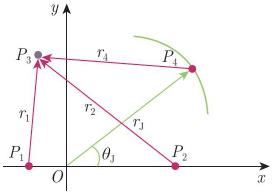
Fig. 2
Corrected Lyapunov orbits (color online)"
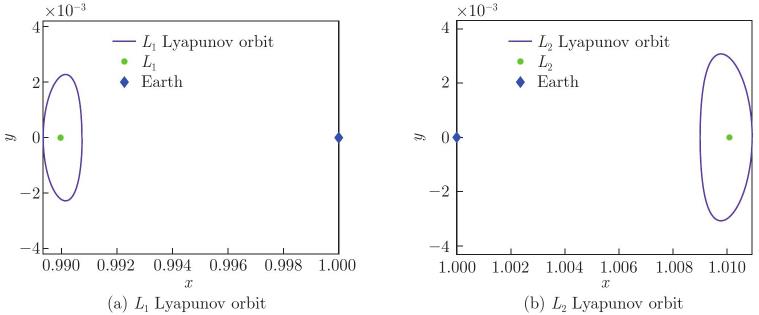
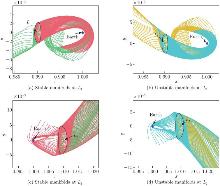
Fig. 3
Invariant manifolds of the RFBP (color online)"
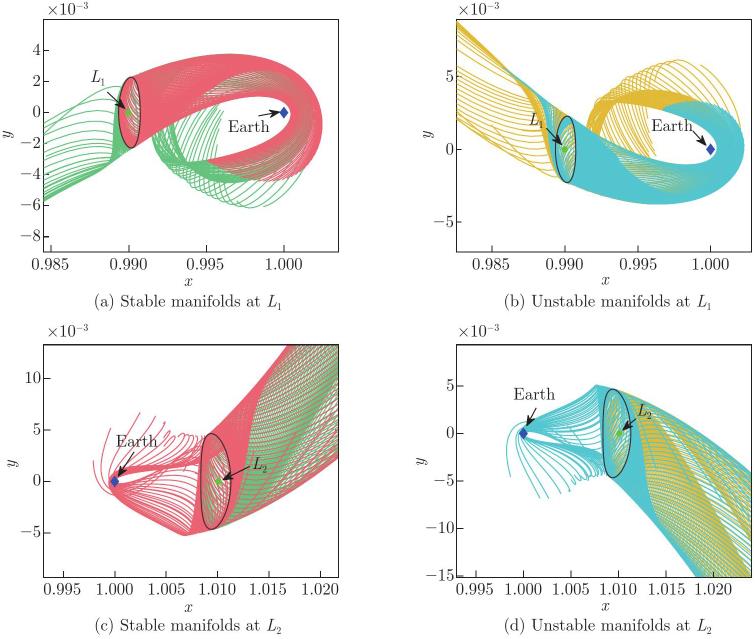
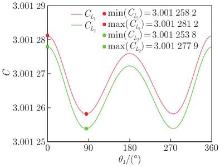
Fig. 4
The instantaneous C at L1 and L2 varying with Jupiter’s phase (color online)"
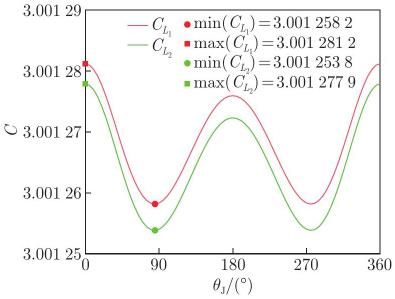
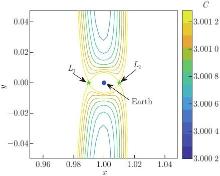
Fig. 5
Variations of zero-velocity curves with the instantaneous C (color online)"
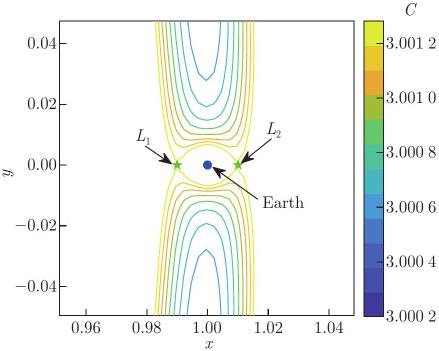
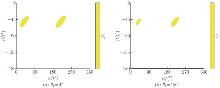
Fig. 6
Distributions of the feasible region and subset at C=3.001 27 under different Jupiter’s phases (color online)"
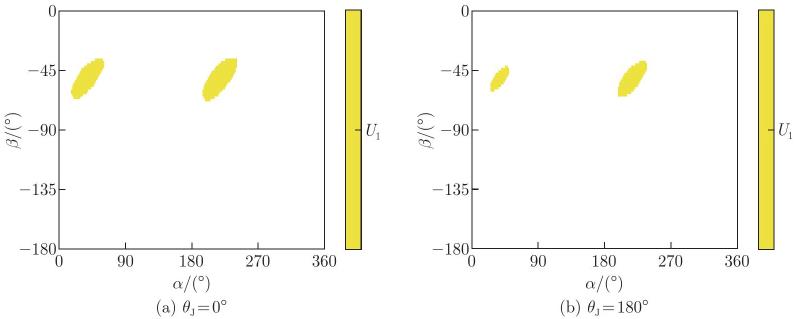
Fig. 7
Distributions of the feasible region and subset at C=3.001 2 under different Jupiter’s phases (color online)"
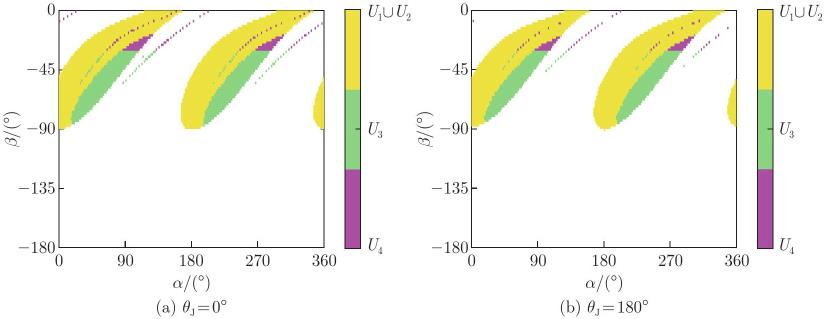
Fig. 8
Distributions of the feasible region and subset at C=3.000 8 under different Jupiter’s phases (color online)"
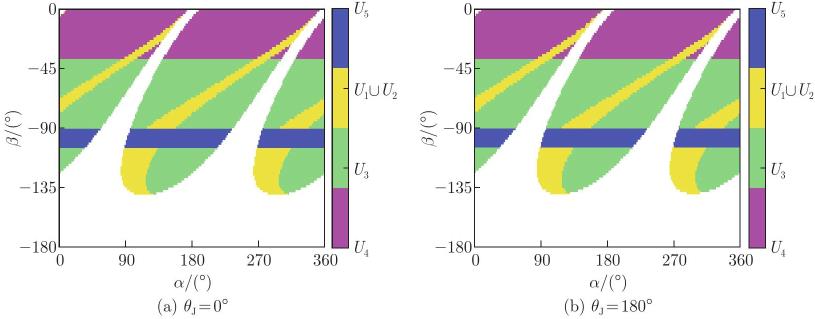
Fig. 9
Distributions of the feasible region and subset at C=3.000 37 under different Jupiter’s phases (color online)"
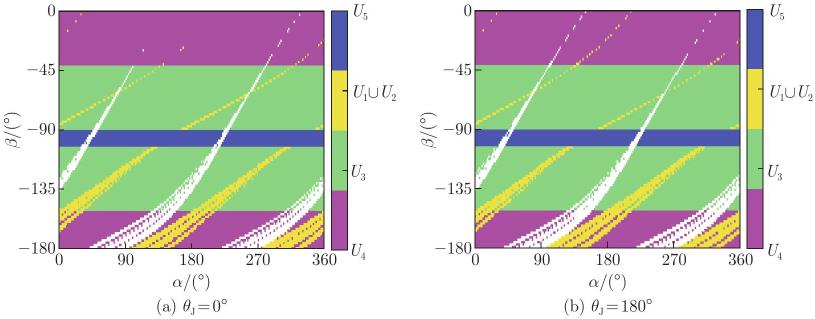
Fig. 10
Distributions of the feasible region and subset at C=3.000 2 under different Jupiter’s phases (color online)"
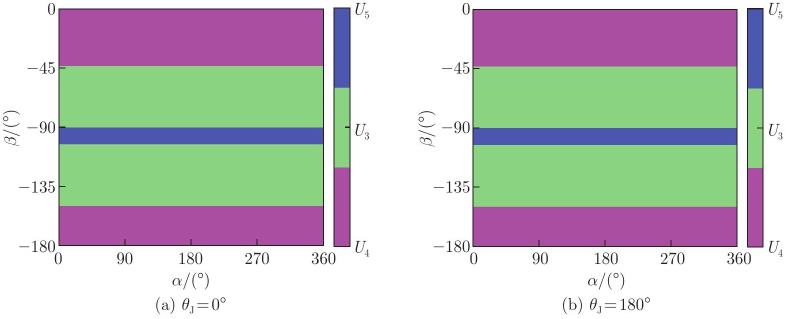
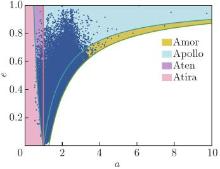
Fig. 11
Distributions of the semi-major axis and eccentricity of NEAs (color online)"
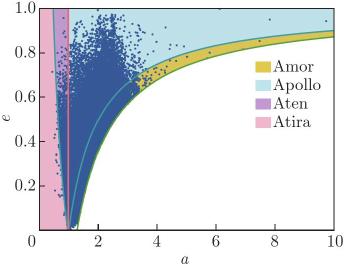
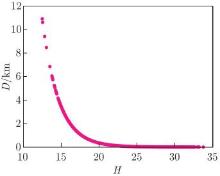
Fig. 12
Relationship between the absolute magnitude and the diameter of NEAs (color online)"
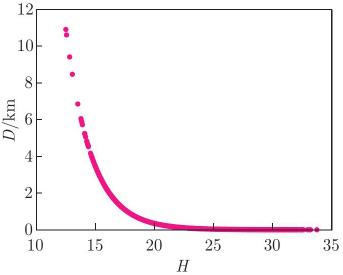
Table 1
Orbital and physical parameters of ten asteroids"
| NEA | a | e | I/(°) | | C | α/(°) | β/(°) |
|---|---|---|---|---|---|---|---|
| 2000 SG344 | 0.977 387 0 | 0.066 898 0 | 0.113 08 | 0.000 788 | 2.996 6 | 164.589 5 | -97.016 7 |
| 2006 GB | 0.958 543 5 | 0.179 454 1 | 10.064 98 | 0.008 840 | 2.939 9 | 325.048 5 | -101.617 6 |
| 2007 CT26 | 0.855 243 0 | 0.386 780 5 | 2.891 42 | 0.002 220 | 2.873 3 | 145.987 8 | -98.901 8 |
| 2010 XC15 | 0.732 385 6 | 0.419 930 8 | 8.240 18 | 0.002 290 | 2.903 1 | 131.972 9 | -91.031 2 |
| 2016 WJ1 | 1.339 919 4 | 0.503 108 0 | 2.888 89 | 0.000 240 | 2.744 8 | 209.041 5 | -94.047 2 |
| 2019 XB | 0.727 853 7 | 0.402 836 6 | 6.130 47 | 0.006 010 | 2.927 2 | 59.918 5 | -93.742 9 |
| 2022 OF1 | 1.014 809 5 | 0.640 576 3 | 1.059 10 | 0.002 510 | 2.532 6 | 11.851 8 | -97.940 2 |
| 2022 QX4 | 0.680 812 6 | 0.504 583 5 | 0.138 13 | 0.000 040 | 2.894 0 | 63.502 3 | -93.047 2 |
| 2023 JD6 | 1.162 715 4 | 0.432 456 3 | 11.675 52 | 0.005 070 | 2.765 0 | 87.555 2 | -90.131 6 |
| 2023 YR | 0.921 788 8 | 0.405 143 8 | 5.718 68 | 0.005 770 | 2.832 0 | 14.401 6 | -94.925 7 |
| Note: I denotes the orbital inclination | |||||||
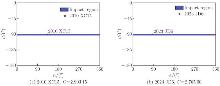
Fig. 13
Impact regions at different instantaneous C and asteroid entry points at the EMSOI boundary (color online)"
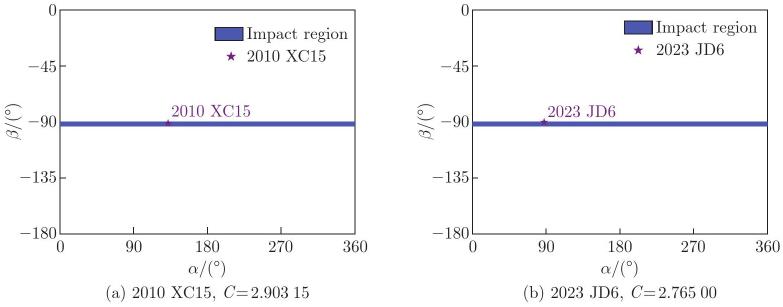
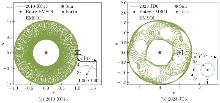
Fig. 14
Orbits of the asteroid in the Sun-Earth rotating coordinate frame (color online)"
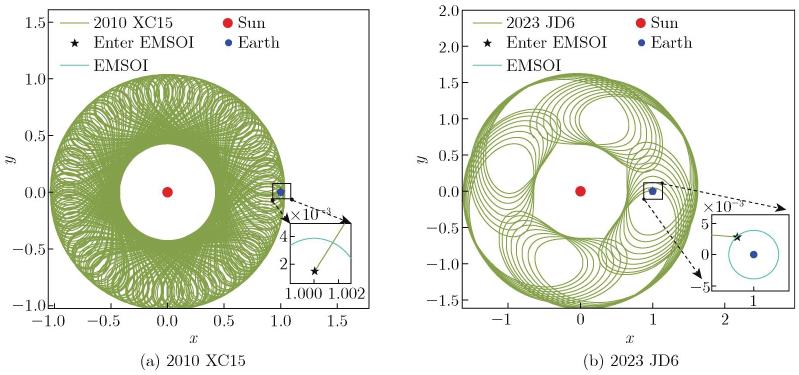
Fig. 15
Orbits of the asteroid and Earth in the heliocentric inertial frame (color online)"
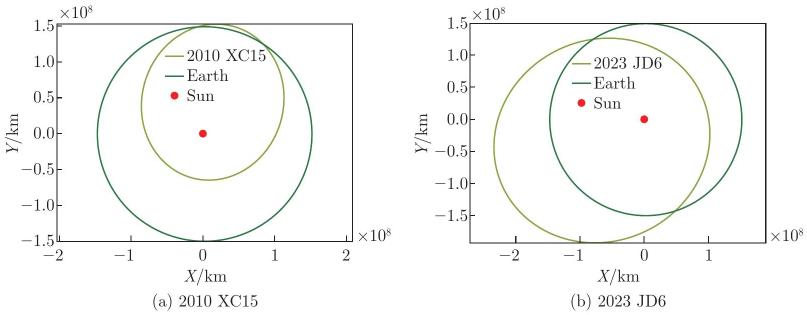
Fig. 16
Variations of the asteroid’s geocentric distance (color online)"
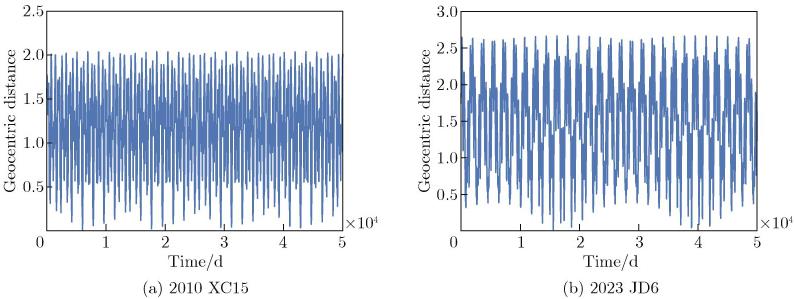
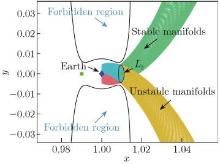
Fig. 17
Design concept of the impact trajectories based on invariant manifolds (color online)"
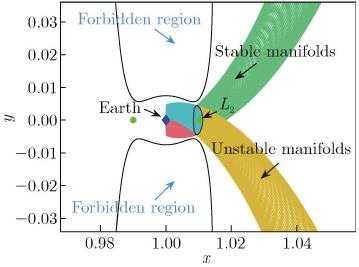
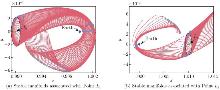
Fig. 18
Stable manifolds and connection points of the Lyapunov orbit in the RFBP (color online)"
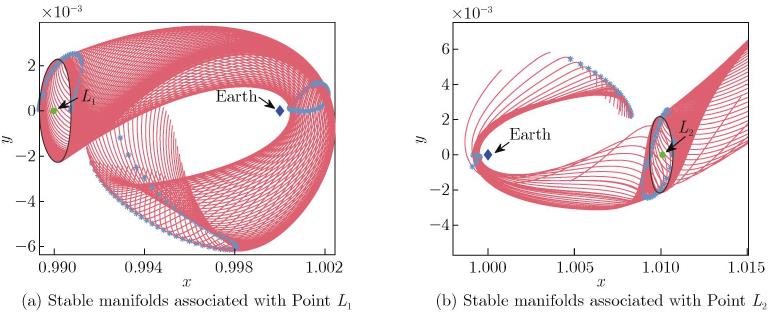
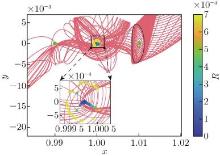
Fig. 19
Variations of the perigee of the stable manifolds with extended integration time, where R denotes the perigee distance (color online)"
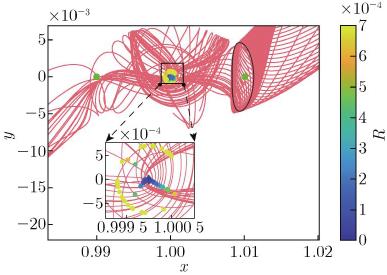
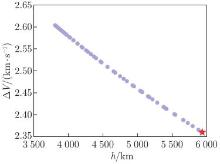
Fig. 20
Relationship between the velocity increment ΔV and the Earth parking orbit altitude h, where the red marker denotes the optimal point (color online)"
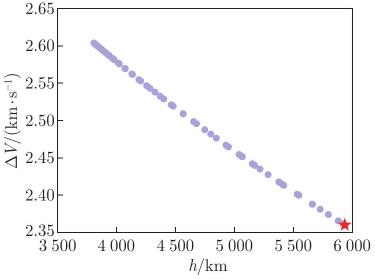
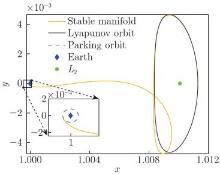
Fig. 21
Transfer trajectory from the Earth parking orbit to the stable manifold (color online)"
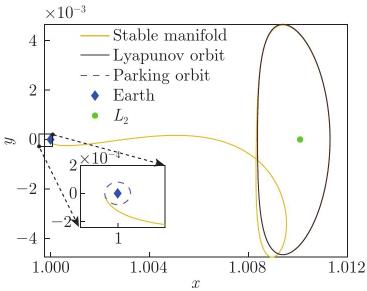
Table 2
Target asteroids identified through the screening processes"
| Parameter | 2010 XC15 | 2023 JD6 |
|---|---|---|
| Type | Aten | Apollo |
| H | 21.48 | 21.34 |
| a | 0.732 385 6 | 1.162 715 4 |
| e | 0.419 930 8 | 0.432 456 3 |
| I/(°) | 8.240 18 | 11.675 52 |
| Ω/(°) | 94.400 96 | 123.699 08 |
| ω/(°) | 158.113 82 | 263.079 9 |
| M/(°) | 65.586 15 | 45.215 97 |
| m3/kg | | |
| D/km | 0.150 3 | 0.160 3 |
| Note: Ω, ω, and M denote the longitude of the ascending node, argument of perihelion, and mean anomaly, respectively | ||
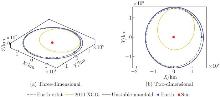
Fig. 22
Orbits of the unstable manifold and asteroid 2010 XC15 in the heliocentric inertial frame (color online)"
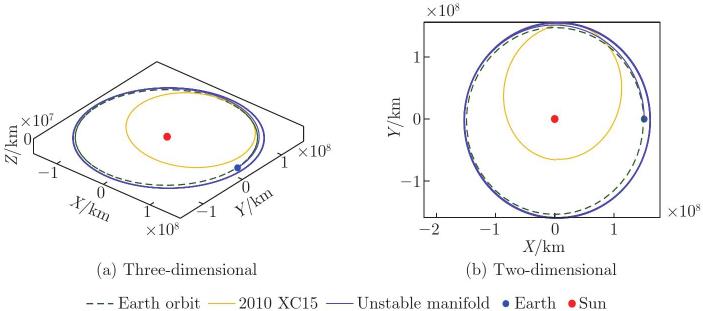
Fig. 23
Orbits of the unstable manifold and asteroid 2023 JD6 in the heliocentric inertial frame (color online)"
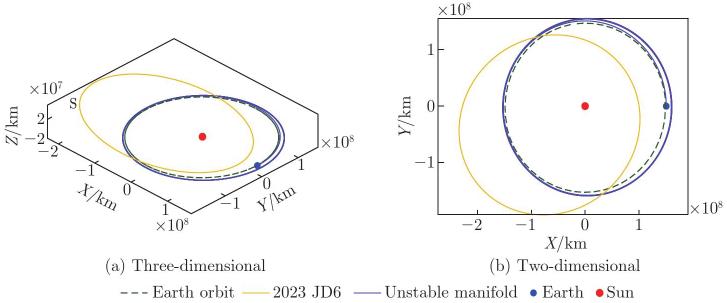
Table 3
Optimization results of impact trajectories based on invariant manifolds"
| Parameter | 2010 XC15 | 2023 JD6 |
|---|---|---|
| Departure | 2028-06-27 | 2028-06-27 |
| | 2.36 | 2.36 |
| | 0.649 9 | 0.402 8 |
| Flight time in the stable manifold/d | 188.024 | 188.024 |
| Flight time in the unstable manifold/d | 961 | 601 |
| Transfer time/d | 274.556 3 | 309.905 0 |
| Impact date | 2032-05-21 | 2031-07-01 |
| Impactor mass/t | 6.69 | 10 |
| Impact velocity/ | 10.101 0 | 14.867 5 |
Fig. 24
Optimized transfer trajectory of the target asteroid (color online)"
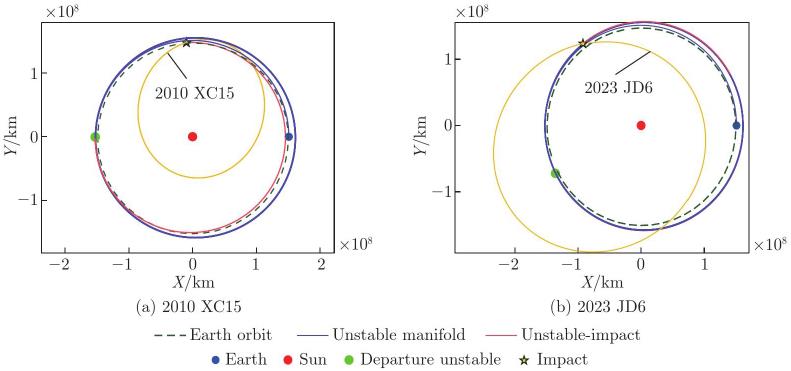
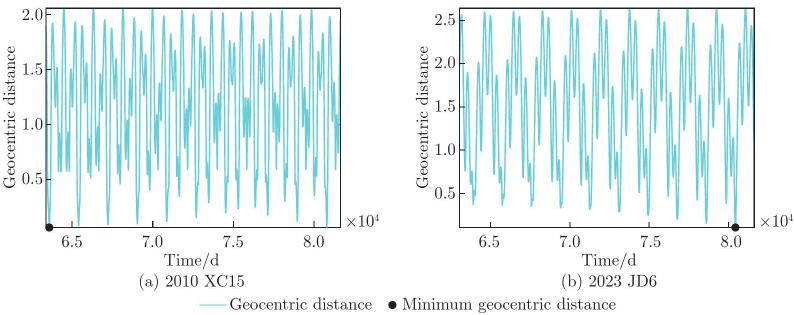
Fig. 25
Variations of the asteroid’s geocentric distance after the impact (color online)"
| [1] | CHAPMAN, C. R. The hazard of near-Earth asteroid impacts on Earth. Earth and Planetary Science Letters, 222(1), 1–15 (2004) |
| [2] | CHYBA, C. F., THOMAS, P. J., and ZAHNLE, K. J. The 1908 Tunguska explosion: atmospheric disruption of a stony asteroid. Nature, 361(6407), 40–44 (1993) |
| [3] | BROWN, P. G., ASSINK, J. D., ASTIZ, L., BLAAUW, R., BOSLOUGH, M. B., BOROVIČKA, J., BRACHET, N., BROWN, D., CAMPBELL-BROWN, M., CERANNA, L., COOKE, W., DE GROOT-HEDLIN, C., DROB, D. P., EDWARDS, W., EVERS, L. G., GARCES, M., GILL, J., HEDLIN, M., KINGERY, A., LASKE, G., LE PICHON, A., MIALLE, P., MOSER, D. E., SAFFER, A., SILBER, E., SMETS, P., SPALDING, R. E., SPURNÝ, P., TAGLIAFERRI, E., UREN, D., WERYK, R. J., WHITAKER, R., and KRZEMINSKI, Z. A 500-kiloton airburst over Chelyabinsk and an enhanced hazard from small impactors. Nature, 503(7475), 238–241 (2013) |
| [4] | A’HEARN, M. F., BELTON, M. J. S., DELAMERE, W. A., KISSEL, J., KLAASEN, K. P., MCFADDEN, L. A., MEECH, K. J., MELOSH, H. J., SCHULTZ, P. H., SUNSHINE, J. M., THOMAS, P. C., VEVERKA, J., YEOMANS, D. K., BACA, M. W., BUSKO, I., CROCKETT, C. J., COLLINS, S. M., DESNOYER, M., EBERHARDY, C. A., ERNST, C. M., FARNHAM, T. L., FEAGA, L., GROUSSIN, O., HAMPTON, D., IPATOV, S. I., LI, J. Y., LINDLER, D., LISSE, C. M., MASTRODEMOS, N., OWEN, W. M. JR, RICHARDSON, J. E., WELLNITZ, D. D., and WHITE, R. L. Deep impact: excavating comet tempel 1. Science, 310(5746), 258–264 (2005) |
| [5] | DALY, R. T., ERNST, C. M., BARNOUIN, O. S., CHABOT, N. L., RIVKIN, A. S., CHENG, A. F., ADAMS, E. Y., AGRUSA, H. F., ABEL, E. D., ALFORD, A. L., ASPHAUG, E. I., ATCHISON, J. A., BADGER, A. R., BAKI, P., BALLOUZ, R. L., BEKKER, D. L., BELLEROSE, J., BHASKARAN, S., BURATTI, B. J., CAMBIONI, S., CHEN, M. H., CHESLEY, S. R., CHIU, G., COLLINS, G. S., COX, M. W., DECOSTER, M. E., ERICKSEN, P. S., ESPIRITU, R. C., FABER, A. S., FARNHAM, T. L., FERRARI, F., FLETCHER, Z. J., GASKELL, R. W., GRANINGER, D. M., HAQUE, M. A., HARRINGTON-DUFF, P. A., HEFTER, S., HERREROS, I., HIRABAYASHI, M., HUANG, P. M., HSIEH, S. W., JACOBSON, S. A., JENKINS, S. N., JENSENIUS, M. A., JOHN, J. W., JUTZI, M., KOHOUT, T., KRUEGER, T. O., LAIPERT, F. E., LOPEZ, N. R., LUTHER, R., LUCCHETTI, A., MAGES, D. M., MARCHI, S., MARTIN, A. C., MCQUAIDE, M. E., MICHEL, P., MOSKOVITZ, N. A., MURPHY, I. W., MURDOCH, N., NAIDU, S. P., NAIR, H., NOLAN, M. C., ORMÖ, J., PAJOLA, M., PALMER, E. E., PEACHEY, J. M., PRAVEC, P., RADUCAN, S. D., RAMESH, K. T., RAMIREZ, J. R., REYNOLDS, E. L., RICHMAN, J. E., ROBIN, C. Q., RODRIGUEZ, L. M., ROUFBERG, L. M., RUSH, B. P., SAWYER, C. A., SCHEERES, D. J., SCHEIRICH, P., SCHWARTZ, S. R., SHANNON, M. P., SHAPIRO, B. N., SHEARER, C. E., SMITH, E. J., STEELE, R. J., STECKLOFF, J. K., STICKLE, A. M., SUNSHINE, J. M., SUPERFIN, E. A., TARZI, Z. B., THOMAS, C. A., THOMAS, J. R., TRIGO-RODRÍGUEZ, J. M., TROPF, B. T., VAUGHAN, A. T., VELEZ, D., WALLER, C. D., WILSON, D. S., WORTMAN, K. A., and ZHANG, Y. Successful kinetic impact into an asteroid for planetary defence. Nature, 616(7957), 443–447 (2023) |
| [6] | CHENG, A. F., AGRUSA, H. F., BARBEE, B. W., MEYER, A. J., FARNHAM, T. L., RADUCAN, S. D., RICHARDSON, D. C., DOTTO, E., ZINZI, A., DELLA CORTE, V., STATLER, T. S., CHESLEY, S., NAIDU, S. P., HIRABAYASHI, M., LI, J. Y., EGGL, S., BARNOUIN, O. S., CHABOT, N. L., CHOCRON, S., COLLINS, G. S., DALY, R. T., DAVISON, T. M., DECOSTER, M. E., ERNST, C. M., FERRARI, F., GRANINGER, D. M., JACOBSON, S. A., JUTZI, M., KUMAMOTO, K. M., LUTHER, R., LYZHOFT, J. R., MICHEL, P., MURDOCH, N., NAKANO, R., PALMER, E., RIVKIN, A. S., SCHEERES, D. J., STICKLE, A. M., SUNSHINE, J. M., TRIGO-RODRIGUEZ, J. M., VINCENT, J. B., WALKER, J. D., WÜNNEMANN, K., ZHANG, Y., AMOROSO, M., BERTINI, I., BRUCATO, J. R., CAPANNOLO, A., CREMONESE, G., DALL’ORA, M., DESHAPRIYA, P. J. D., GAI, I., HASSELMANN, P. H., IEVA, S., IMPRESARIO, G., IVANOVSKI, S. L., LAVAGNA, M., LUCCHETTI, A., EPIFANI, E. M., MODENINI, D., PAJOLA, M., PALUMBO, P., PERNA, D., PIRROTTA, S., POGGIALI, G., ROSSI, A., TORTORA, P., ZANNONI, M., and ZANOTTI, G. Momentum transfer from the DART mission kinetic impact on asteroid Dimorphos. Nature, 616(7957), 457–460 (2023) |
| [7] | BRUCK SYAL, M., OWEN, J. M., and MILLER, P. L. Deflection by kinetic impact: sensitivity to asteroid properties. Icarus, 269, 50–61 (2016) |
| [8] | KUMAMOTO, K. M., OWEN, J. M., SYAL, M. B., PEARL, J., RASKIN, C., CALDWELL, W. K., RAINEY, E., STICKLE, A. M., DALY, R. T., and BARNOUIN, O. Predicting asteroid material properties from a DART-like kinetic impact. The Planetary Science Journal, 3(10), 237 (2022) |
| [9] | LI, M. T., WANG, Y. R., WANG, Y. L., ZHOU, B. H., and ZHENG, W. Enhanced kinetic impactor for deflecting large potentially hazardous asteroids via maneuvering space rocks. Scientific Reports, 10, 8506 (2020) |
| [10] | WANG, K. D., ZHOU, Q., LIU, Y. D., LI, M. T., and WANG, Y. R. Research on space-based kinetic impactor disrupting small-sized asteroids under short warning time conditions. Acta Astronautica, 219, 291–299 (2024) |
| [11] | WESTRA, A., DAMAZO, J., MARTINEZ, D., HOUSEN, K., MORTON, J., and LAMBERSON, L. Asteroid deflection: do multiple impacts from a split-impactor increase total momentum transfer? International Journal of Impact Engineering, 204, 105363 (2025) |
| [12] | WANG, K. D., LI, M. T., ZHOU, Q., and WANG, Y. R. Targets selection and mission optimization of kinetic impact deflection test mission for small size asteroids. Advances in Space Research, 72(8), 3477–3498 (2023) |
| [13] | WANG, Y. R., LI, M. T., and ZHOU, B. H. Impulsive trajectory optimization of kinetic impactor missions for asteroid deflection based on an approximation deflection model (in Chinese). Chinese Journal of Theoretical and Applied Mechanics, 53(3), 912–928 (2021) |
| [14] | RICHARDSON, D. L. Analytic construction of periodic orbits about the collinear points. Celestial Mechanics, 22(3), 241–253 (1980) |
| [15] | KOON, W. S., LO, M. W., MARSDEN, J. E., and ROSS, S. D. Constructing a low-energy transfer between Jovian moons. Contemporary Mathematics, 292(1), 129–145 (2002) |
| [16] | SCANTAMBURLO, E., GUZZO, M., and PAEZ, R. I. Interplanetary transfers using stable and unstable manifold tubes originating at L1 and L2 in the elliptic restricted three-body problems. Acta Astronautica, 200, 97–110 (2022) |
| [17] | TOPPUTO, F., VASILE, M., and BERNELLI-ZAZZERA, F. Low energy interplanetary transfers exploiting invariant manifolds of the restricted three-body problem. The Journal of the Astronautical Sciences, 53(4), 353–372 (2005) |
| [18] | FANTINO, E., FLORES, R., DONNARUMMA, G., CANALES, D., and HOWELL, K. C. Direct low-energy trajectories to near-earth objects. Acta Astronautica, 229, 333–344 (2025) |
| [19] | ZHU, R. Z. and XIANG, C. Studies of Melnikov method and transversal homoclinic orbits in the circular planar restricted three-body problem. Applied Mathematics and Mechanics (English Edition), 17(12), 1177–1187 (1996) https://doi.org/10.1007/BF02498706 |
| [20] | GÓMEZ, G., KOON, W. S., LO, M. W., MARSDEN, J. E., MASDEMONT, J., and ROSS, S. D. Connecting orbits and invariant manifolds in the spatial restricted three-body problem. Nonlinearity, 17(5), 1571 (2004) |
| [21] | GONG, S. P., LI, J. F., BAOYIN, H. X., and GAO, Y. F. Lunar landing trajectory design based on invariant manifold. Applied Mathematics and Mechanics (English Edition), 28(2), 201–207 (2007) https://doi.org/10.1007/s10483-007-0208-1 |
| [22] | AN, S. Y., LIU, M., LI, H. Y., and WU, F. Five-impulse low-energy Earth-Moon transfer using manifolds. Advances in Space Research, 73(1), 201–224 (2024) |
| [23] | MCCARTHY, B. P. and HOWELL, K. C. Four-body cislunar quasi-periodic orbits and their application to ballistic lunar transfer design. Advances in Space Research, 71(1), 556–584 (2023) |
| [24] | PANG, B., MASDEMONT, J. J., and QIAO, D. Temporary capture about the Moon involving Sun-Earth libration point dynamics. Communications in Nonlinear Science and Numerical Simulation, 147, 108792 (2025) |
| [25] | SZEBEHELY, V. and JEFFERYS, W. H. Theory of orbits: the restricted problem of three bodies. American Journal of Physics, 36(4), 375 (1968) |
| [26] | GONG, S. P., LI, J. F., and BAOYIN, H. X. Solar radiation pressure used for formation flying control around the Sun-Earth libration point. Applied Mathematics and Mechanics (English Edition), 30(8), 1009–1016 (2009) https://doi.org/10.1007/s10483-009-0807-z |
| [27] | ZHENG, X. T., YU, L. Z., and QIN, Y. P. The libration points in photogravitational restricted three-body problem. Applied Mathematics and Mechanics (English Edition), 15(8), 771–777 (1994) https://doi.org/10.1007/BF02451627 |
| [28] | TAKEDA, K. and KUWAHARA, T. Divergence evaluation criteria for lunar departure trajectories under bi-circular restricted four-body problem. Aerospace, 12(10), 918 (2025) |
| [29] | OSHIMA, K. and YANAO, T. Jumping mechanisms of Trojan asteroids in the planar restricted three- and four-body problems. Celestial Mechanics and Dynamical Astronomy, 122(1), 53–74 (2015) |
| [30] | HOWELL, K. C. and SPENCER, D. B. Periodic orbits in the restricted four-body problem. Acta Astronautica, 13(8), 473–479 (1986) |
| [31] | QI, Y. and DE RUITER, A. Short-term capture of the Earth-Moon system. Monthly Notices of the Royal Astronomical Society, 476(4), 5464–5478 (2018) |
| [32] | BIELAWSKI, R. Near-Earth objects (NEO) and other current space threats. Security and Defence Quarterly, 28(1), 117742 (2020) |
| [1] | XU Run-Zhang;XU Chuang. Nonlinear Schr¨odinger equation with combined power-type nonlinearities and harmonic potential [J]. Applied Mathematics and Mechanics (English Edition), 2010, 31(4): 521-528. |
| [2] | GONG Sheng-ping;LI Jun-feng;BAOYIN He-xi;GAO Yun-feng. Lunar landing trajectory design based on invariant manifold [J]. Applied Mathematics and Mechanics (English Edition), 2007, 28(2): 201-207 . |
| [3] | YU Pei;GAO Ping;GUO Bo-ling. DYNAMICAL CHARACTER FOR A PERTURBED COUPLED NONLINEAR SCHRÖDINGER SYSTEM [J]. Applied Mathematics and Mechanics (English Edition), 2005, 26(7): 823-829 . |
| [4] | YANG Liu. THE INVARIANT MANIFOLD METHOD AND THE CONTROLLABILITY OF NONLINEAR CONTROL SYSTEM [J]. Applied Mathematics and Mechanics (English Edition), 2000, 21(11): 1320-1330. |
| [5] | Zhao Guojing;Wei Jianguo . INVARIANT SUB-MANIFOLDS AND MODES OF NONLINEAR AUTONOMOUS SYSTEMS [J]. Applied Mathematics and Mechanics (English Edition), 1998, 19(7): 687-693. |
| [6] | Liu Jie. INVARIANT MANIFOLDS AND THEIR STABILITY IN A THREE-DIMENSIONAL MEASURE-PRESERVING MAPPING SYSTEMS [J]. Applied Mathematics and Mechanics (English Edition), 1995, 16(10): 943-950. |
| Viewed | ||||||
|
Full text |
|
|||||
|
Abstract |
|
|||||




 Email Alert
 RSS
RSS