Applied Mathematics and Mechanics (English Edition) ›› 2026, Vol. 47 ›› Issue (3): 573-598.doi: https://doi.org/10.1007/s10483-026-3363-9
Previous Articles Next Articles
Xiaojuan TIAN1,2, Yueting ZHOU3,4,†( )
)
Received:2025-11-24
Revised:2026-01-16
Published:2026-03-02
Contact:
Yueting ZHOU, E-mail: zhouyt@tongji.edu.cnSupported by:2010 MSC Number:
Xiaojuan TIAN, Yueting ZHOU. The adhesive interlayer effect on the thermoelectric structure with multiple electrodes. Applied Mathematics and Mechanics (English Edition), 2026, 47(3): 573-598.
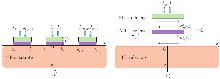
Fig. 1
(a) Schematic of multiple electrodes in contact with a TE substrate, with an adhesive interlayer between them; (b) stress field diagram at the interface between each electrode and the TE substrate (color online)"
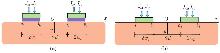
Fig. 2
(a) Model of two electrodes bonded to a TE substrate, with an adhesive interlayer between them; (b) model of two electrodes directly attached to a TE substrate without an adhesive interlayer (color online)"
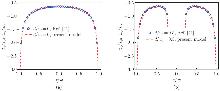
Fig. 3
Comparison between the analytical solutions of the TE field in Ref. [41] and those obtained from the present model: (a) d/w1=0, i.e., where the debonding length is zero; (b) d/w1=0.5 (color online)"
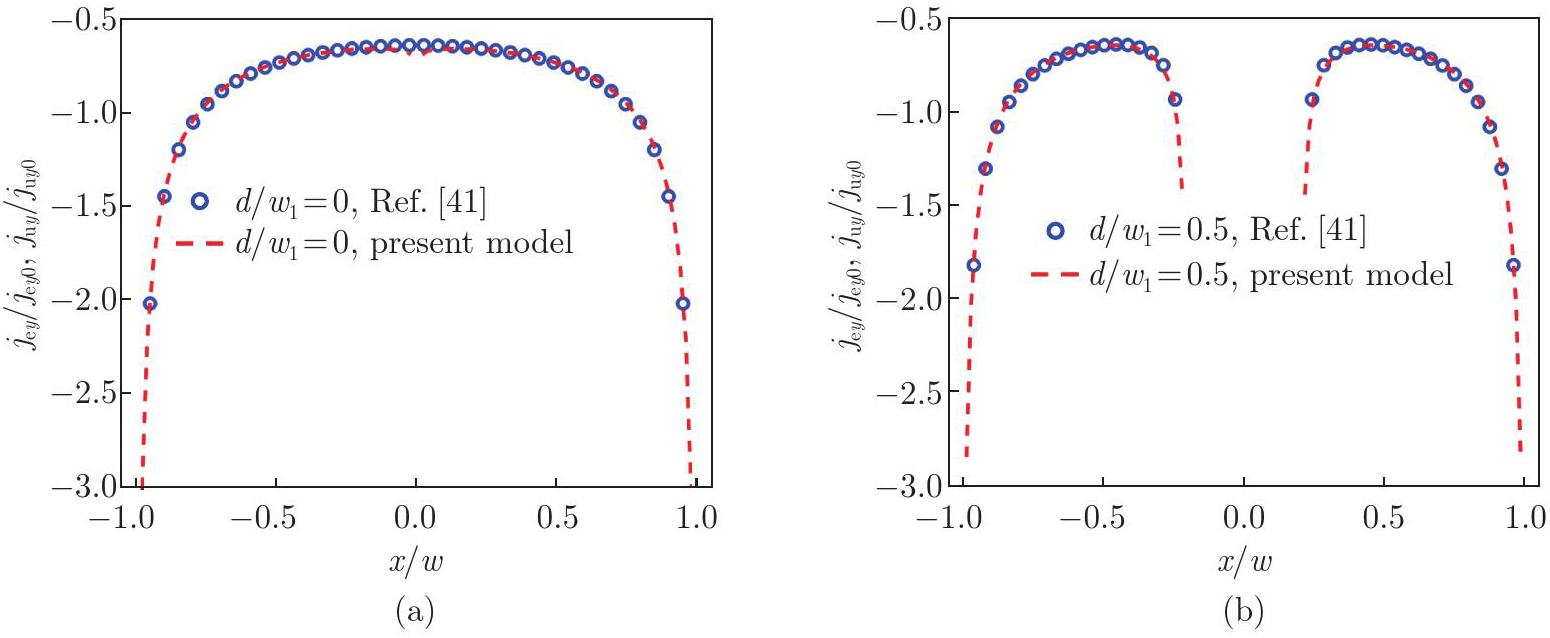
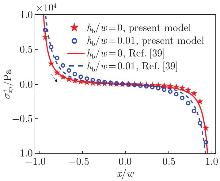
Fig. 4
Comparison of the shear stress from Ref. [39] and that from the present model for the cases with and without the adhesive interlayers, when hf/lf=0.01, Gb/Gs=0.5, Gf/Gs=3, Je=6 A/m, and Ju=0.01 W/m (color online)"
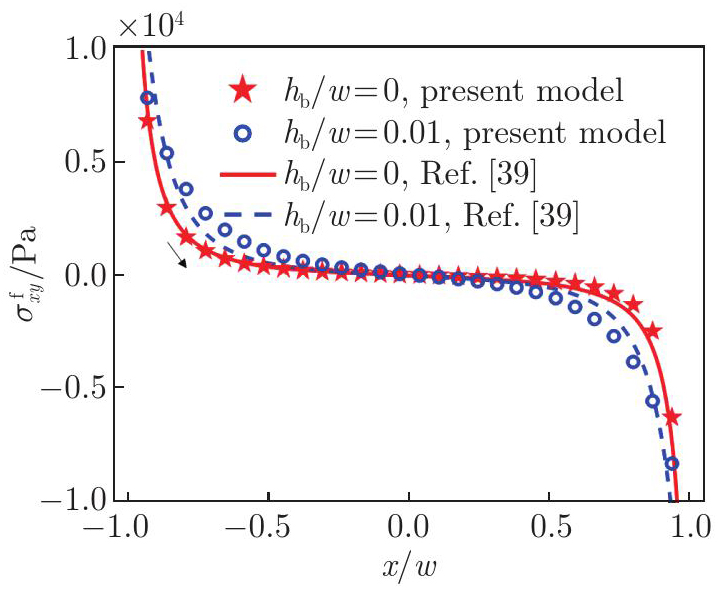
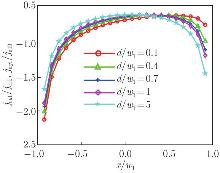
Fig. 5
Normal electric current density and normal energy flux affected by the distance between the two electrodes d/w1 in the model of two electrodes attached to a TE substrate, when w2/w1=1 (color online)"
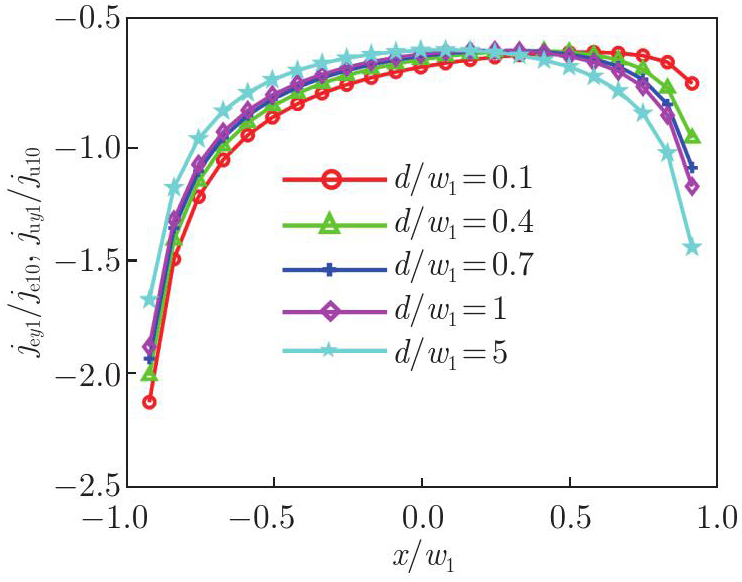
Fig. 6
Normal electric current density and normal energy flux affected by the length of the right electrode w2/w1 in the model of two electrodes attached to a TE substrate, when d/w1=0.4: (a) the left electrode; (b) the right electrode (color online)"
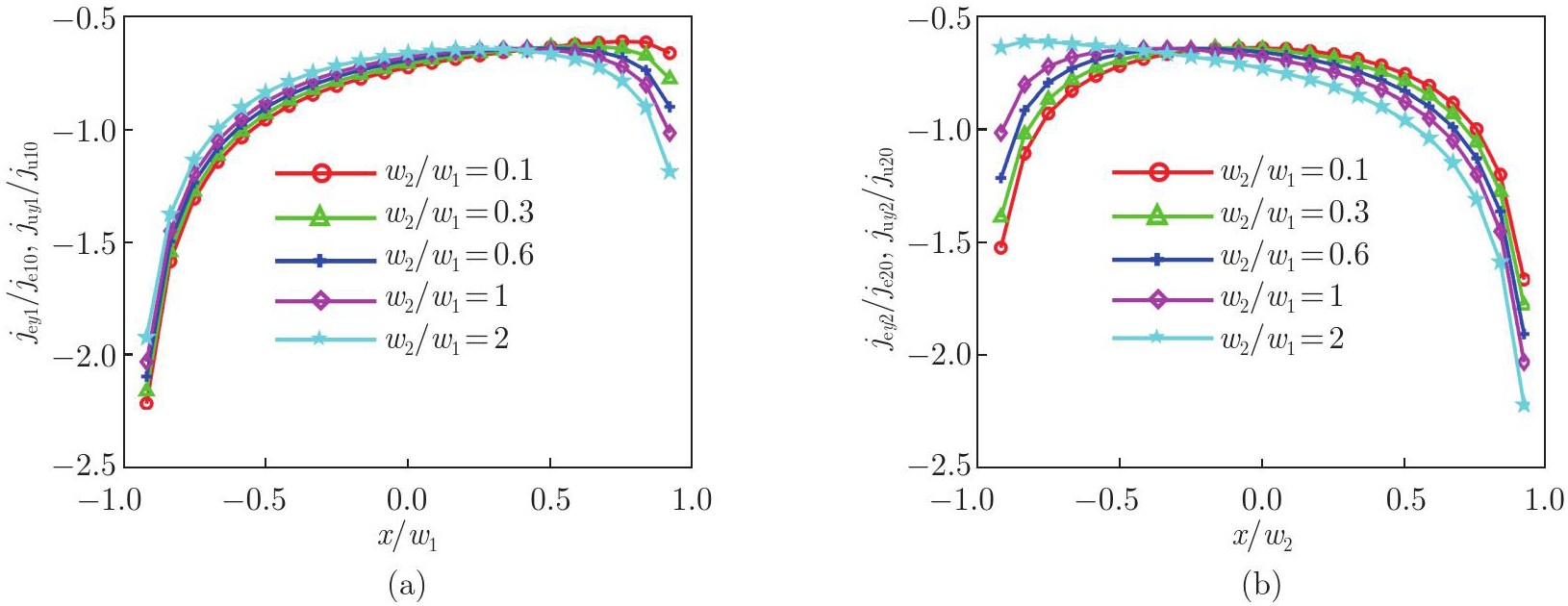
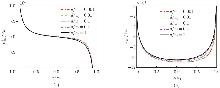
Fig. 7
Interfacial stresses affected by the distance between the two electrodes d/w1 in the model of two electrodes attached to a TE substrate without adhesive interlayers, when hf1/w1=hf2/w1=0.04, Gf1/Gs=Gf2/Gs=3, Je1=Je2=6 A/m, Ju1=Ju2=0.01 W/m, and w2/w1=1: (a) the shear stress; (b) the transverse stress (color online)"
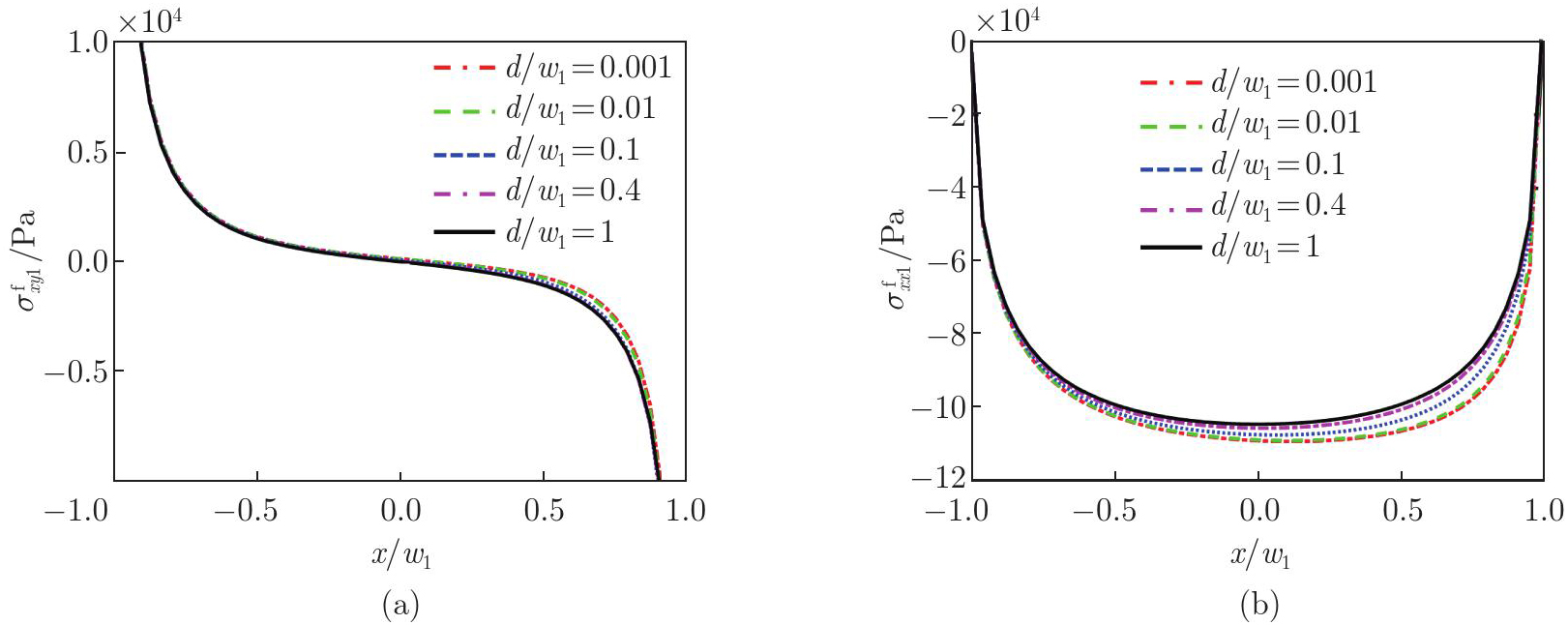
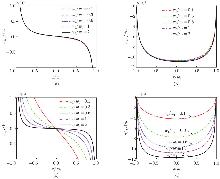
Fig. 8
Interfacial shear stress and transverse stress affected by the length of the right electrode w2/w1 in the model of two electrodes attached to a TE substrate without adhesive interlayers, when hf1/w1=hf2/w1=0.04, Gf1/Gs=Gf2/Gs=3, Je1=Je2=6 A/m, Ju1=Ju2=0.01 W/m, and d/w1=0.1: (a) and (b) the left electrode; (c) and (d) the right electrode (color online)"
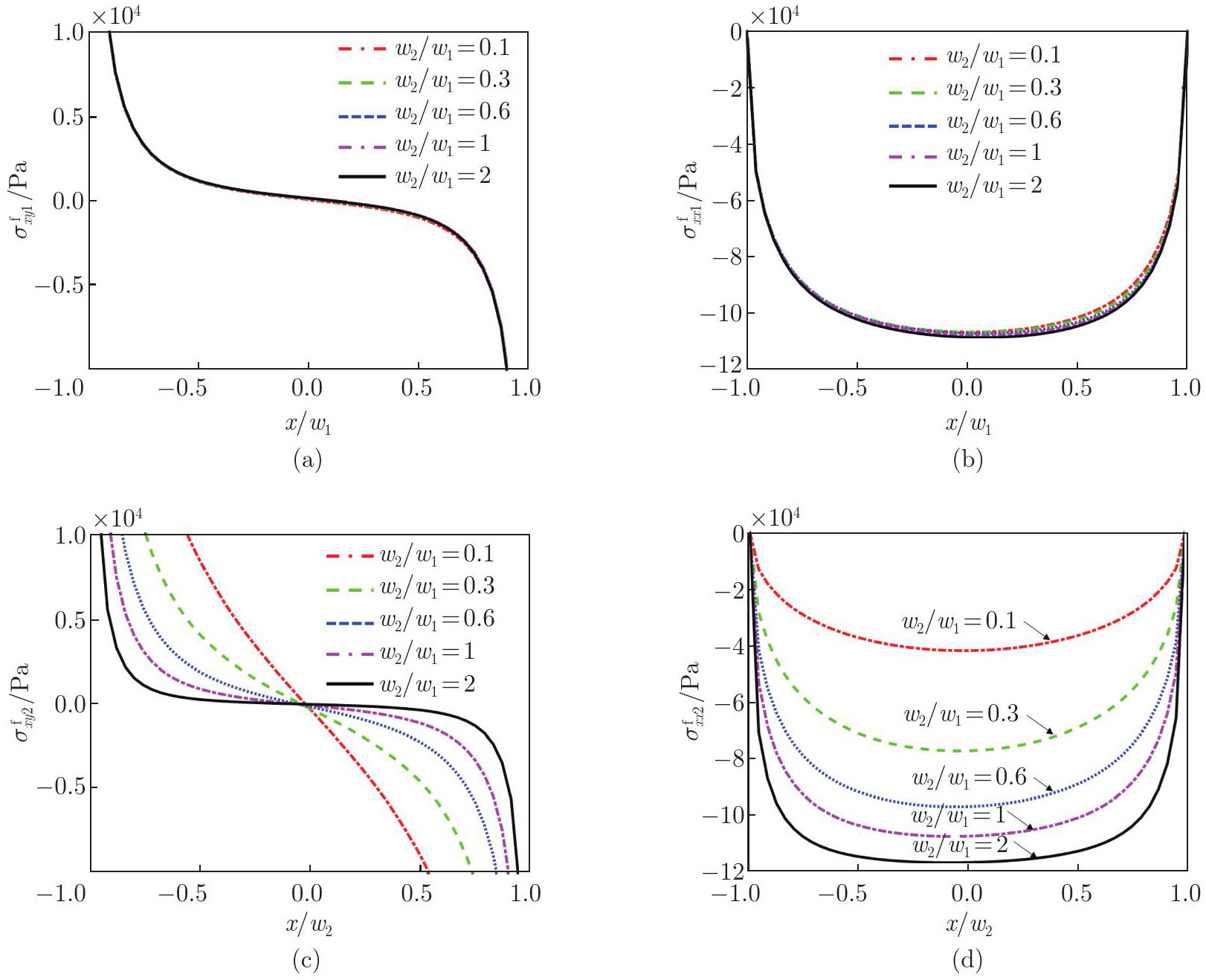
Fig. 9
Interfacial stresses affected by the total electric current loads on the two electrodes Je1 and Je2 in the model of two electrodes attached to a TE substrate without adhesive interlayers, when hf1/w1=hf2/w1=0.04, Gf1/Gs=Gf2/Gs=3, Ju1=Ju2=0.01 W/m, d/w1=0.1, and w2/w1=1: (a) the shear stress; (b) the transverse stress (color online)"
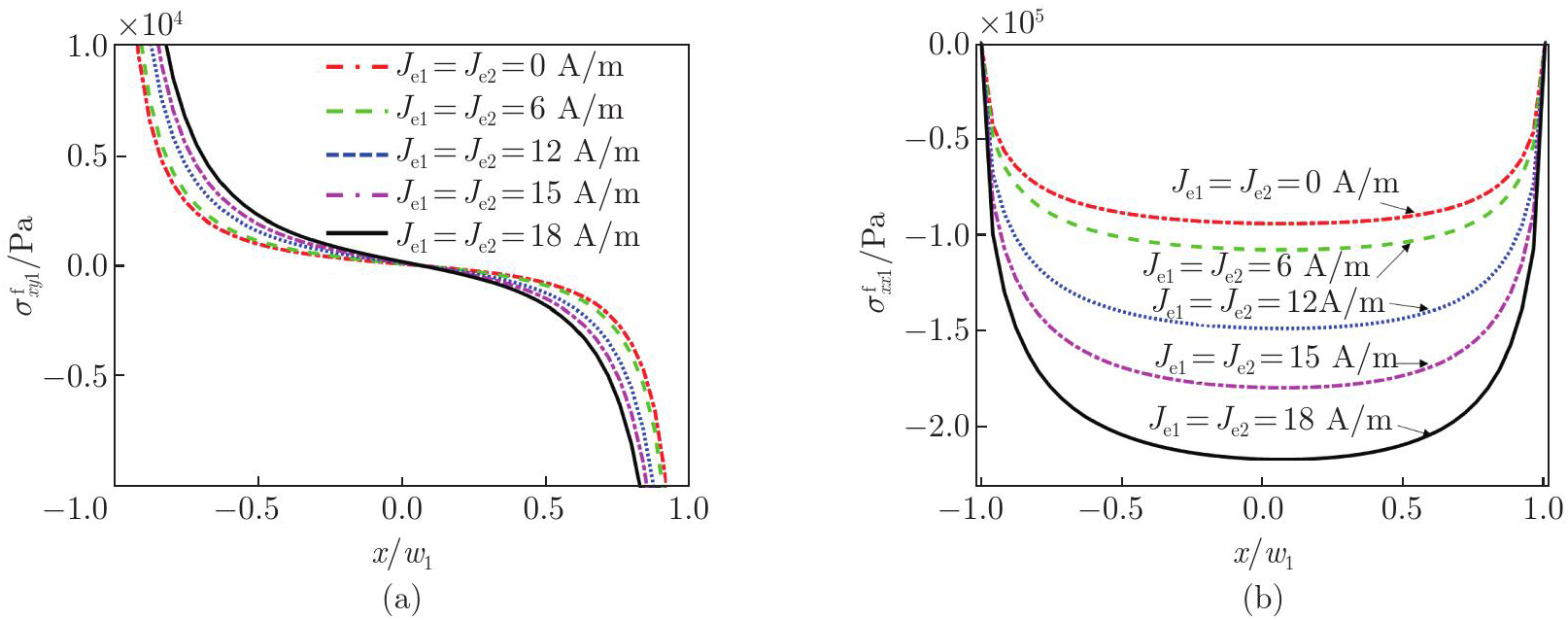
Fig. 10
Interfacial stresses affected by the total energy flux loads on the two electrodes Ju1 and Ju2 in the model of two electrodes attached to a TE substrate without adhesive interlayers, when hf1/w1=hf2/w1=0.04, Gf1/Gs=Gf2/Gs=3, Je1=Je2=6 A/m, d/w1=0.1, and w2/w1=1: (a) the shear stress; (b) the transverse stress (color online)"
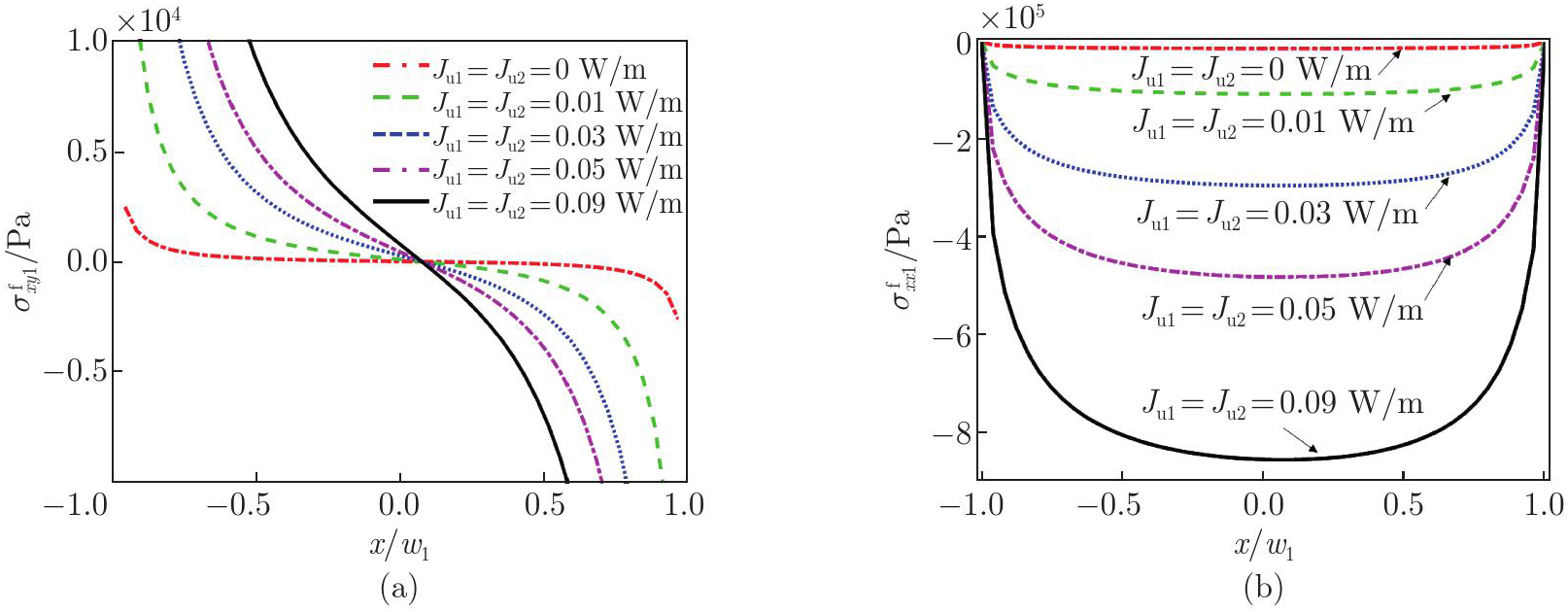
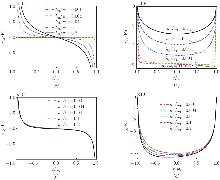
Fig. 11
Interfacial shear stress and transverse stress affected by the thickness of the left electrode hf1/w1 in the model of two electrodes attached to a TE substrate without adhesive interlayers, when hf2/w1=0.04, Gf1/Gs=Gf2/Gs=3, Je1=6 A/m, Je2=0 A/m, Ju1=0.01 W/m, Ju2=0 W/m, d/w1=0.1, and w2/w1=1: (a) and (b) the left-loaded electrode; (c) and (d) the right-unloaded electrode (color online)"
Table 1
Shear stress intensity factors near the ends of the left electrode (x=a1, x=b1) for different distances between the two adjacent electrodes d/w1 with the following fixed parameters: w2/w1=1, hf1/w1=hf2/w1=0.04, Gf1/Gs=Gf2/Gs=3, Je1=Je2=6 A/m, and Ju1=Ju2=0.01 W/m"
| Shear stress intensity factor | |||||
|---|---|---|---|---|---|
| 0.001 | 0.01 | 0.1 | 0.4 | 1 | |
| 7 908.39 | 7 894.02 | 7 825.05 | 7 743.94 | 7 691.31 | |
Table 2
Shear stress intensity factors near the ends of both electrodes for different widths of the right electrode w2/w1 with the following fixed parameters: d/w1=0.1, hf1/w1=hf2/w1=0.04, Gf1/Gs=Gf2/Gs=3, Je1=Je2=6 A/m, and Ju1=Ju2=0.01 W/m"
| Shear stress intensity factor | |||||
|---|---|---|---|---|---|
| 0.1 | 0.3 | 0.6 | 1 | 2 | |
| 7 835.84 | 7 801.43 | 7 803.79 | 7 825.05 | 7 888.13 | |
| 18 855.3 | 13 921 | 10 629 | 8 489.85 | 6 145.76 | |
Table 3
Shear stress intensity factors near the ends of the left electrode (x=a1, x=b1) for different total electric current loads Je1 and Je2 with the following fixed parameters: d/w1=0.1, w2/w1=1, hf1/w1=hf2/w1=0.04, Gf1/Gs=Gf2/Gs=3, and Ju1=Ju2=0.01 W/m"
| Shear stress intensity factor | |||||
|---|---|---|---|---|---|
| 0 | 6 | 12 | 15 | 18 | |
| 6 834.94 | 7 825.05 | 10 795.4 | 13 023.1 | 15 745.9 | |
Table 4
Shear stress intensity factors near the ends of the left electrode (x=a1, x=b1) for different total energy flux loads Ju1 and Ju2 with the following fixed parameters: d/w1=0.1, w2/w1=1, hf1/w1=hf2/w1=0.04, Gf1/Gs=Gf2/Gs=3, and Je1=Je2=6 A/m"
| Shear stress intensity factor | |||||
|---|---|---|---|---|---|
| 0 | 0.01 | 0.03 | 0.05 | 0.09 | |
| 990.109 | 7 825.05 | 21 494.9 | 35 164.8 | 62 504.6 | |
Table 5
Shear stress intensity factors near the ends of both electrodes for different thicknesses of the left electrode hf1/w1 with the following fixed parameters: d/w1=0.1, w2/w1=1, hf2/w1=0.04, Gf1/Gs=Gf2/Gs=3, Je1=6 A/m, Je2=0 A/m, Ju1=0.01 W/m, and Ju2=0 W/m"
| Shear stress intensity factor | |||||
|---|---|---|---|---|---|
| 0.001 | 0.004 | 0.04 | 0.1 | 0.2 | |
| 500.464 | 1 155.01 | 3 665.04 | 5 379.27 | 6 758.02 | |
| 3 629.07 | 3 653.76 | 3 976.41 | 4 299.7 | 4 582.82 | |
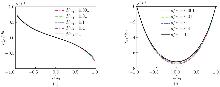
Fig. 12
Interfacial stresses affected by the distance between the two electrodes d/w1 in the model of two electrodes attached to a TE substrate with an adhesive interlayer, when hb1/w1=hb2/w1=0.04, Gb1/Gs=Gb2/Gs=0.05, hf1/w1=hf2/w1=0.04, Gf1/Gs=Gf2/Gs=3, Je1=Je2=6 A/m, Ju1=Ju2=0.01 W/m, and w2/w1=1: (a) the shear stress; (b) the transverse stress (color online)"
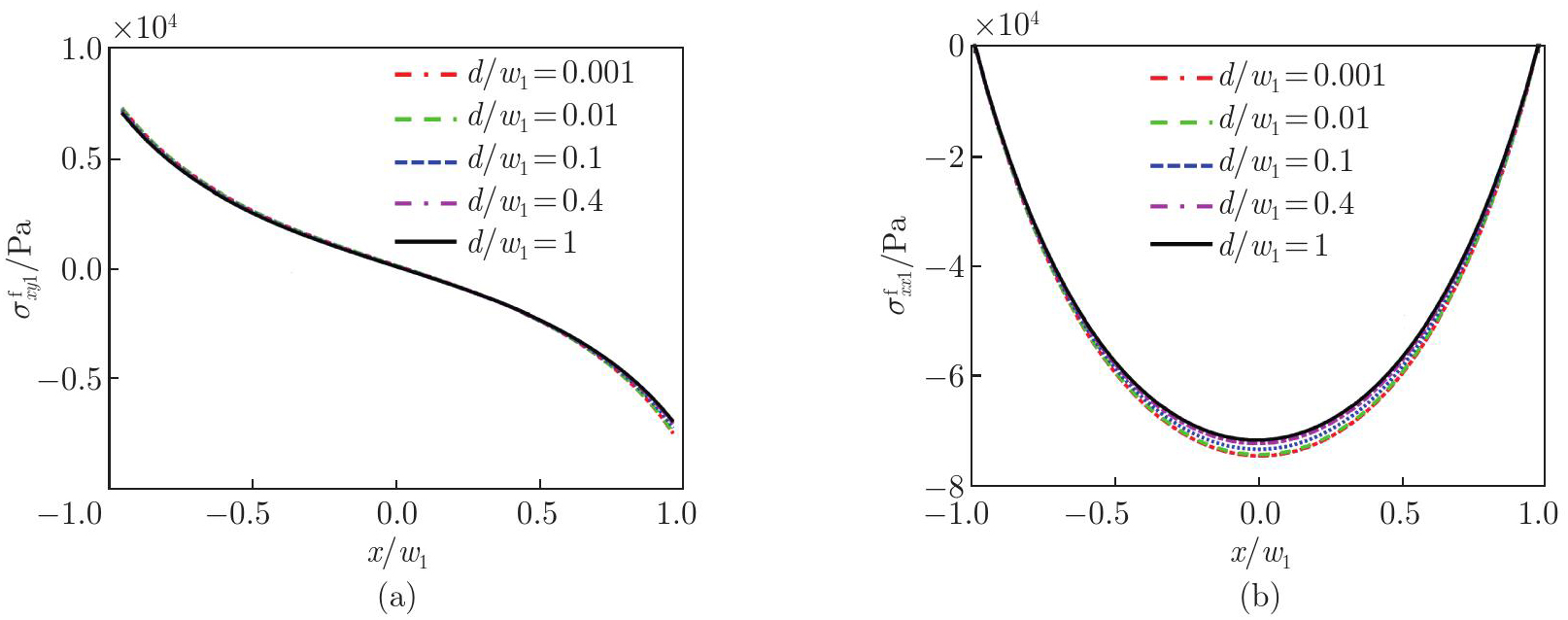
Fig. 13
Interfacial stresses affected by the thicknesses of the two adhesive interlayers hb1/w1 and hb2/w1 in the model of two electrodes attached to a TE substrate with an adhesive interlayer, when hf1/w1=hf2/w1=0.04, Gf1/Gs=Gf2/Gs=3, Gb1/Gs=Gb2/Gs=0.05, Je1=Je2=6 A/m, Ju1=Ju2=0.01 W/m, d/w1=0.1, and w2/w1=1: (a) the shear stress; (b) the transverse stress (color online)"
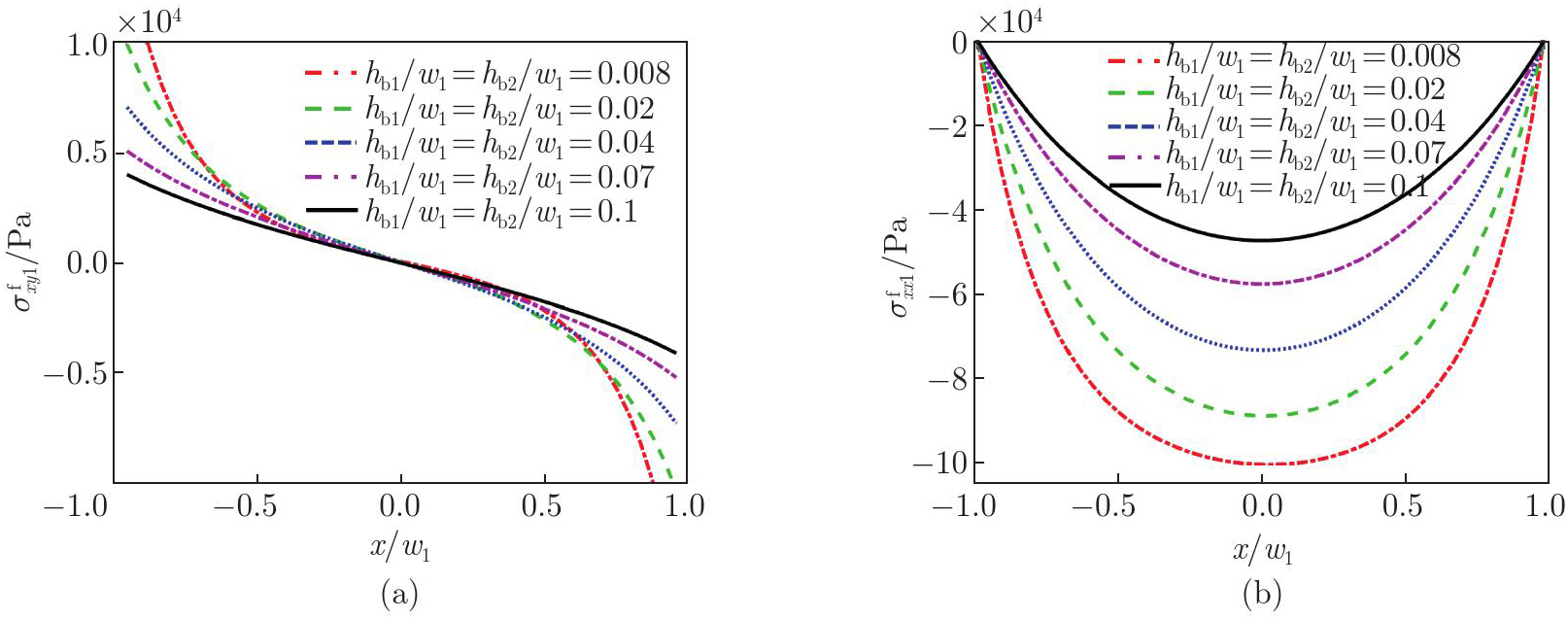
Fig. 14
Interfacial stresses affected by the shear moduli of the two adhesive interlayers Gb1/Gs and Gb2/Gs in the model of two electrodes attached to a TE substrate with an adhesive interlayer, when hb1/w1=hb2/w1=0.04, hf1/w1=hf2/w1=0.04, Gf1/Gs=Gf2/Gs=3, Je1=Je2=6 A/m, Ju1=Ju2=0.01 W/m, d/w1=0.1, and w2/w1=1: (a) the shear stress; (b) the transverse stress (color online)"
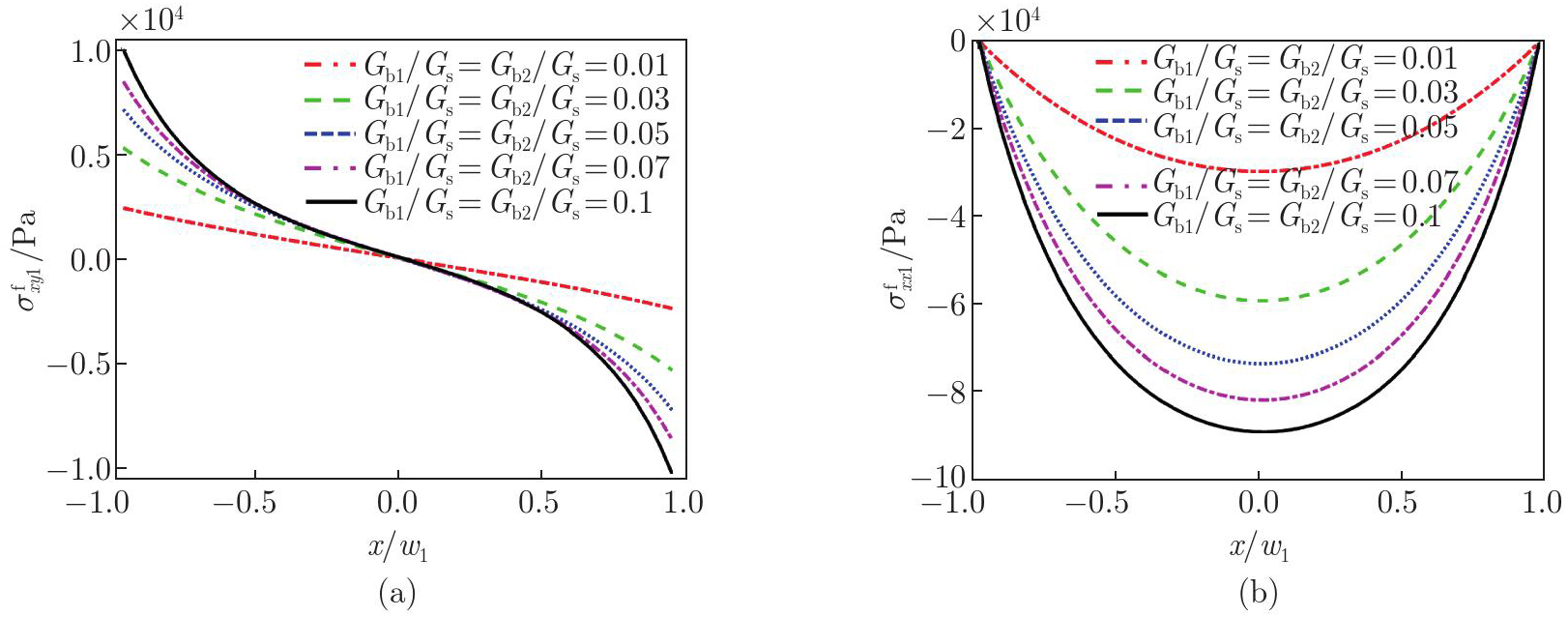
Fig. 15
Interfacial stresses affected by the shear moduli of the two electrodes Gf1/Gs and Gf2/Gs in the model of two electrodes attached to a TE substrate with an adhesive interlayer, when hb1/w1=hb2/w1=0.04, Gb1/Gs=Gb2/Gs=0.05, hf1/w1=hf2/w1=0.04, Je1=Je2=6 A/m, Ju1=Ju2=0.01 W/m, d/w1=0.1, and w2/w1=1: (a) the shear stress; (b) the transverse stress (color online)"
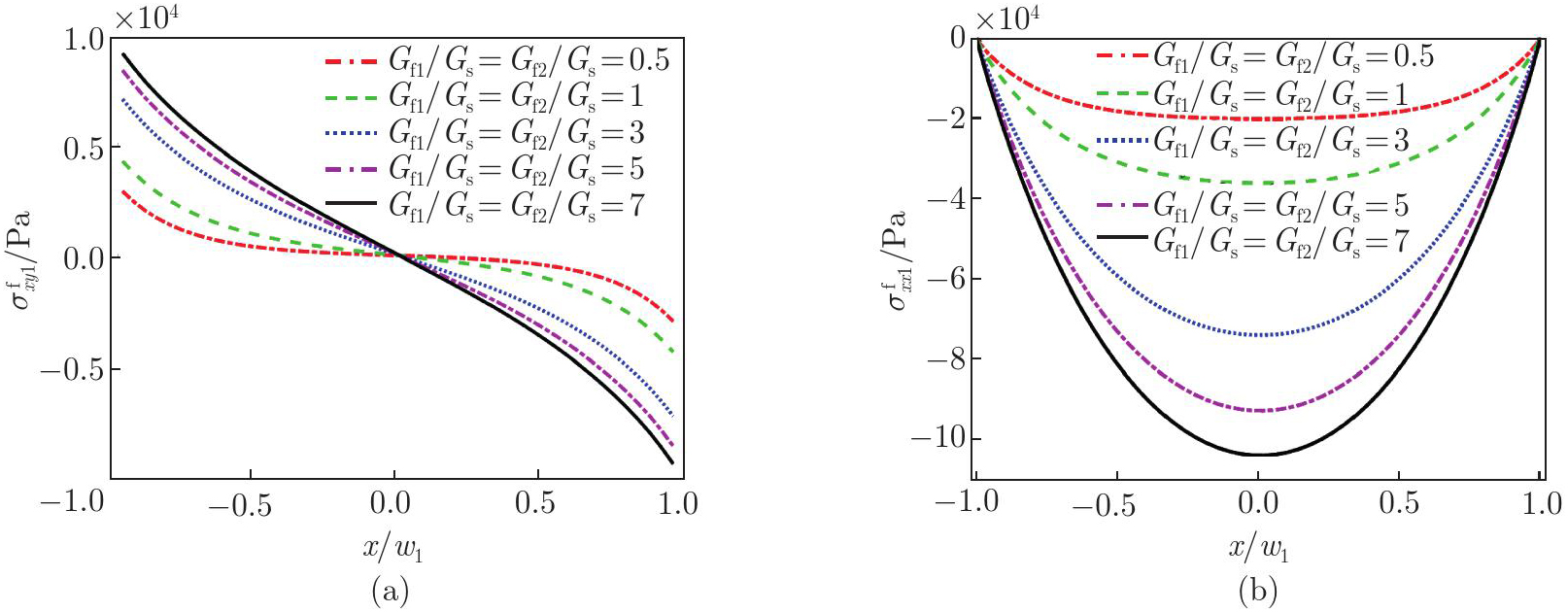
Fig. 16
Interfacial stresses in the model of two electrodes attached to a TE substrate with and without an adhesive interlayer, when hb1/w1=hb2/w1=0.04, Gb1/Gs=Gb2/Gs=0.05, Gf1/Gs=Gf2/Gs=3, Je1=Je2=6 A/m, Ju1=Ju2=0.01 W/m, d/w1=0.1, and w2/w1=1: (a) the shear stress; (b) the transverse stress (color online)"
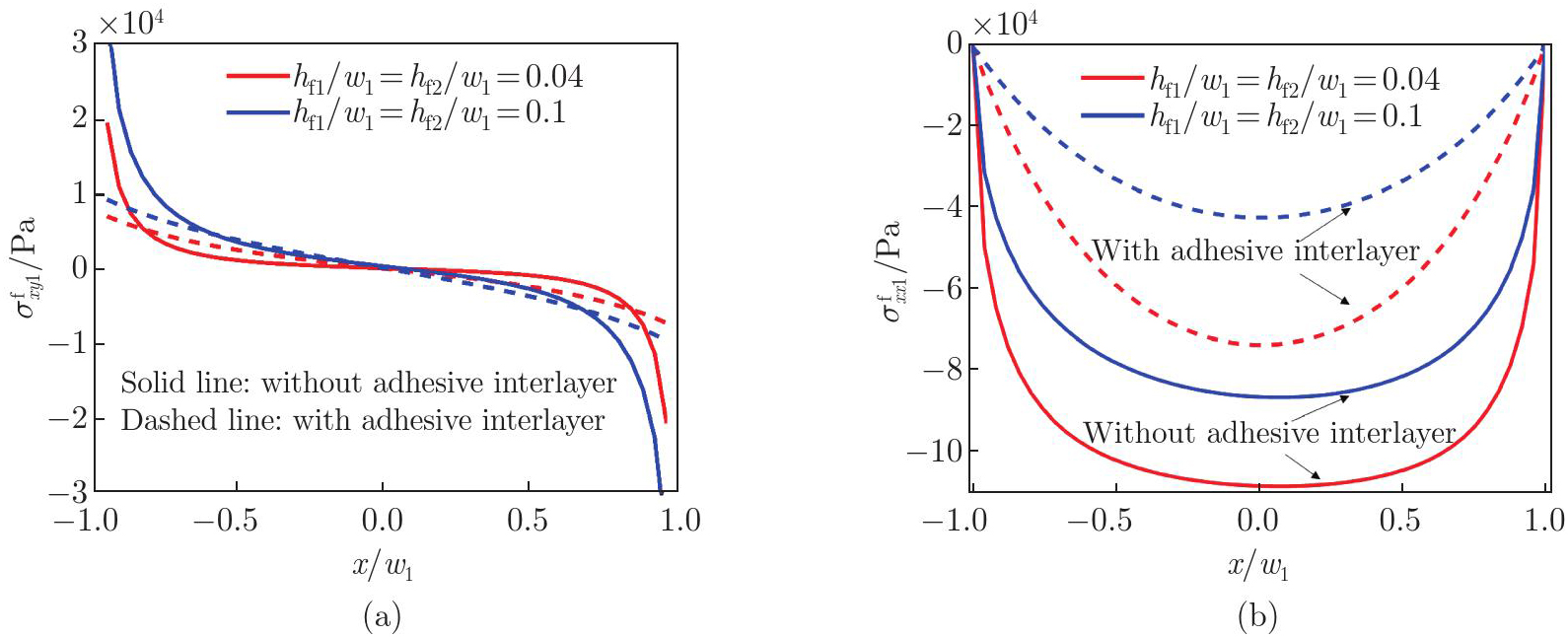
Fig. 17
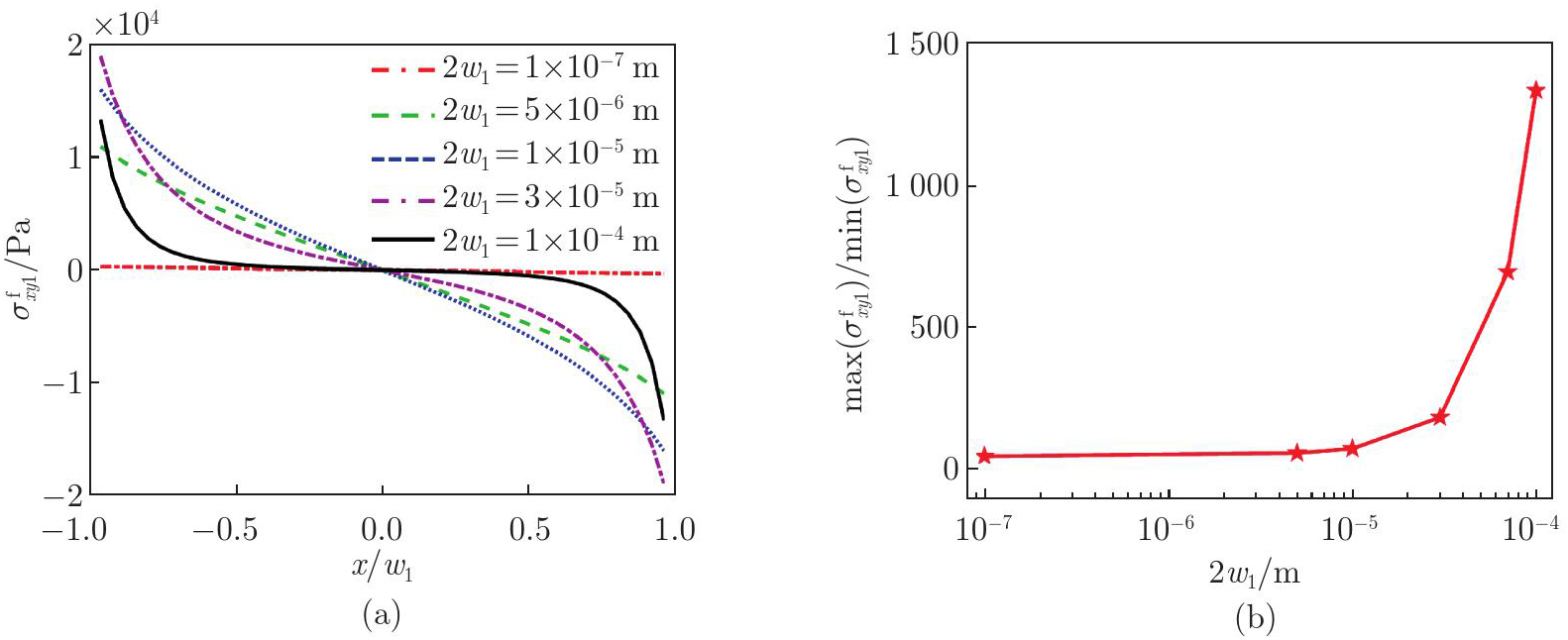
(a) Interfacial stresses in the model of two electrodes attached to a TE substrate with an adhesive interlayer for different electrode lengths; (b) ratio of the maximum to minimum interfacial shear stresses as a function of the electrode length, when hf1=hf2=10−6 m, hb1=hb2=10−7 m, Gf1/Gs=Gf2/Gs=3, Gb1/Gs=Gb2/Gs=0.5, Je1=Je2=6 A/m, Ju1=Ju2=0.01 W/m, d=0.001 m, and w2=w1 (color online)"
| [1] | BELL, L. E. Cooling, heating, generating power, and recovering waste heat with thermoelectric systems. Science, 321, 1457–1461 (2008) |
| [2] | MAHFUZ, M. M. H., ARAI, S., MIYAKE, Y., MATSUKI, T., and WATANABE, T. Impact of metal/semiconductor contact layout on the performance of an integrated silicon cavity-free micro thermoelectric generator. Microelectronic Engineering, 300, 112365 (2025) |
| [3] | BUN, K., RAPAKA, S. S., PATHAK, S., DATE, A., and WANG, X. Additive manufacturing, topology optimization of thermoelectric generators, and beyond: a comprehensive review on pioneering thermoelectric conversion for a sustainable future. Applied Thermal Engineering, 278, 127437 (2025) |
| [4] | WANG, D., DING, J., MA, Y., ZHAO, L., and DI, C. Multi-heterojunctioned plastics with high thermoelectric figure of merit. nature, 632, 528–535 (2024) |
| [5] | SOLEIMANI, Z., ZORAS, S., CERANIC, B., SHAHZAD, S., and CUI, Y. A review on recent developments of thermoelectric materials for room-temperature applications. Sustainable Energy Technologies and Assessments, 37, 100604 (2020) |
| [6] | CHAMPIER, D. Thermoelectric generators: a review of applications. Energy Conversion and Management, 140, 167–181 (2017) |
| [7] | LIU, W., LU, Y., YANG, J., MAO, D., HUANG, Y., and WANG, F. Preparation of high-performance Ag2Se thermoelectric films and devices for wearable energy harvesting. Materials Research Bulletin, 193, 113650 (2026) |
| [8] | LI, H., WANG, Y. P., WU, X. Z., ZHU, K., WANG, S. H., YU, M., and LIU, W. S. A general route to design solar thermoelectric generators under the constant heat flux thermal boundary. Energy & Environmental Science, 18, 2861–2872 (2025) |
| [9] | HELT, A., DUPARCHY, A., COWLEY, A., MÜLLER, E., and DE BOOR J. MgCuSb as a suitable electrode for contacting pre-compacted pellets of MgAgSb thermoelectric material. Science and Technology of Advanced Materials, 26, 2506982 (2025) |
| [10] | LING, Y., QIU, G., LIU, D., MIN, E., FENG, J., LI, J., ZHANG, P., SUN, R., and LIU, R. Impact of intrinsic properties and interface contacts on thermoelectric transient supercooling. Applied Thermal Engineering, 219, 119690 (2023) |
| [11] | BARAKO, M. T., PARK, W., MARCONNET, A. M., ASHEGHI, M., and GOODSON, K. E. Thermal cycling, mechanical degradation, and the effective figure of merit of a thermoelectric module. Journal of Electronic Materials, 42, 372–381 (2013) |
| [12] | KUMARI, N. and DASGUPTA, T. Developing contacting solutions for n-type Mg3Sb1.5Bi0.5 based thermoelectric materials. Journal of Alloys and Compounds, 944, 169220 (2023) |
| [13] | TIAN, X. J., ZHOU, Y. T., GUAN, X. F., WANG, L. H., and DING, S. H. The frictional contact problem of a rigid punch sliding over thermoelectric materials. International Journal of Solids and Structures, 200-201, 145–157 (2020) |
| [14] | ERDOGAN, F. and GUPTA, G. D. The problem of an elastic stiffener bonded to a half plane. Journal of Applied Mechanics — Transactions of ASME, 38, 937–941 (1971) |
| [15] | SHIELD, T. W. and KIM, K. S. Beam theory models for thin film segments cohesively bonded to an elastic half space. International Journal of Solids and Structures, 29, 1085–1103 (1992) |
| [16] | WANG, X. D. and MEGUID, S. A. On the electroelastic behaviour of a thin piezoelectric actuator attached to an infinite host structure. International Journal of Solids and Structures, 37, 3231–3251 (2000) |
| [17] | JIN, C. and WANG, X. Analytical modelling of the electromechanical behaviour of surface-bonded piezoelectric actuators including the adhesive layer. Engineering Fracture Mechanics, 78, 2547–2562 (2011) |
| [18] | CHEN, P. J., PENG, J., LIU, H., GAO, F., and GUO, W. The electromechanical behavior of a piezoelectric actuator bonded to a graded substrate including an adhesive layer. Mechanics of Materials, 123, 77–87 (2018) |
| [19] | CHEN, P. J., CHEN, S. H., and YAO, Y. Nonslipping contact between a mismatch film and a finite-thickness graded substrate. Journal of Applied Mechanics, 83, 021007 (2016) |
| [20] | CHEN, P. J., CHEN, S. H., GUO, W., and GAO, F. The interface behavior of a thin piezoelectric film bonded to a graded substrate. Mechanics of Materials, 127, 26–38 (2018) |
| [21] | KUMAR, D., MEENA, R. K., HIRSHIKESH, and GHADAI, R. K. Experimentally validated finite element model for mechanical and fracture characteristics of SiCN thin films under different loads. Scientific Reports, 15, 31759 (2025) |
| [22] | ALIZADEH, M. and WANG, X. A nonlinear electromechanical model for partially debonded thin-sheet piezoelectric actuators. Acta Mechanica, 235, 833–850 (2024) |
| [23] | ERDEM ALACA B., SAIF, M. T. A., and SEHITOGLU, H. On the interface debond at the edge of a thin film on a thick substrate. Acta Materialia, 50, 1197–1209 (2002) |
| [24] | CHEN, P. J., CHEN, S. H., PENG, J., GAO, F., and LIU, H. The interface behavior of a thin film bonded imperfectly to a finite thickness gradient substrate. Engineering Fracture Mechanics, 217, 106529 (2019) |
| [25] | GÜLER, M., ALINIA, Y., and RADI, E. Couple-stress effects in a thin film bonded to a half-space. Mathematics and Mechanics of Solids, 29, 629–644 (2024) |
| [26] | ERDOGAN, F. and JOSEPH, P. F. Mechanical modeling of multilayered films on an elastic substrate — part I: analysis. Journal of Electronic Packaging, 112, 309–316 (1990) |
| [27] | CHEN, P. J., CHEN, S. H., LIU, H., PENG, J., and GAO, F. The interface behavior of multiple piezoelectric films attaching to a finite-thickness gradient substrate. Journal of Applied Mechanics — Transactions of ASME, 87, 011003 (2020) |
| [28] | ABBASZADEH-FATHABADI, S. A., ALINIA, Y., and GÜLER, M. A. On the mechanics of a double thin film on a finite thickness substrate. International Journal of Solids and Structures, 279, 112349 (2023) |
| [29] | DANG, H., QI, D., FAN, C., LU, C., and ZHAO, M. On the interfacial behavior of two-dimensional decagonal quasicrystal films with an adhesive layer due to thermal misfit. Engineering Fracture Mechanics, 303, 110119 (2024) |
| [30] | ZHANG, W., LU, C. S., ZHAO, M., FAN, C., and DANG, H. On the interfacial behavior of a one-dimensional hexagonal piezoelectric quasicrystal film based on the beam theory. Applied Mathematics and Mechanics (English Edition), 46(2), 289–304 (2025) https://doi.org/10.1007/s10483-025-3214-9 |
| [31] | GÜLER, M. A. and ALINIA, Y. An elastic-constant stress cohesive zone model for an orthotropic piezoelectric actuator adhesively bonded to a substrate. Engineering Fracture Mechanics, 309, 110391 (2024) |
| [32] | LV, S., LI, X., QI, L., HUA, J., XING, S., SHI, Y., SHIMADA, T., and GAO, C. Phase-field modeling of flexible piezoelectric composites incorporating interfacial failure. Engineering Fracture Mechanics, 328, 111512 (2025) |
| [33] | LIU, Y., WANG, B. L., and ZHANG, C. Mechanical model for a thermoelectric thin film bonded to an elastic infinite substrate. Mechanics of Materials, 114, 88–96 (2017) |
| [34] | LIU, Y., WANG, B. L., and ZHANG, C. Thermoelastic behavior of a thermoelectric thin-film attached to an infinite elastic substrate. Philosophical Magazine, 97, 43–57 (2017) |
| [35] | LIU, Y., WANG, K. F., and WANG, B. L. Instability-induced wrinkling in thermoelectric thin film/substrate structures for thermal protection systems in supersonic space shuttle applications. Mechanics of Advanced Materials and Structures, 27, 455–461 (2020) |
| [36] | LI, D., CHEN, P., HUANG, Z., LIU, H., and CHEN, S. The interfacial behavior of a thermoelectric thin-film bonded to an orthotropic substrate. International Journal of Solids and Structures, 267, 112160 (2023) |
| [37] | ZHOU, Y. T., TIAN, X. J., and DING, S. H. Microstructure size-dependent contact behavior of a thermoelectric film bonded to an elastic substrate with couple stress theory. International Journal of Solids and Structures, 256, 111982 (2022) |
| [38] | FARHADIAN, A. and ALINIA, Y. Thermal stress analysis in a graded thermoelectric film bonded to a homogeneous substrate. Mechanics of Materials, 203, 105256 (2025) |
| [39] | TIAN, X. J., ZHOU, Y. T., and DING, S. H. The effectiveness of the bonding layer to attain reliable thermoelectric structures. European Journal of Mechanics-A/Solids, 93, 104513 (2022) |
| [40] | TIAN, X. J., ZHOU, Y. T., and ZHANG, C. Z. The reliability of elastic electrode/graded thermoelectric substrate systems with the adhesive interlayer. Mechanics of Materials, 209, 105424 (2025) |
| [41] | TIAN, X. J., JIN, J. H., WANG, W. S., DING, S. H., and ZHOU, Y. T. The interface behavior of an electrode imperfectly bonded to a thermoelectric substrate. International Journal of Solids and Structures, 324, 113688 (2026) |
| [1] | Yali ZHANG, Yueting ZHOU, Shenghu DING. Frictional contact analysis of a rigid solid with periodic surface sliding on the thermoelectric material [J]. Applied Mathematics and Mechanics (English Edition), 2024, 45(1): 179-196. |
| Viewed | ||||||
|
Full text |
|
|||||
|
Abstract |
|
|||||





 Email Alert
 RSS
RSS