Applied Mathematics and Mechanics (English Edition) ›› 2026, Vol. 47 ›› Issue (3): 473-496.doi: https://doi.org/10.1007/s10483-026-3361-7
Previous Articles Next Articles
Dongxu GUO1,2, Xiaolong ZHANG1,†( ), Ruilan TIAN1, Xiangyang LI3, Minghao WANG1
Received:2025-10-17
Revised:2026-01-12
Published:2026-03-02
Contact:
Xiaolong ZHANG, E-mail: xiaolongzhang@stdu.edu.cnSupported by:2010 MSC Number:
Dongxu GUO, Xiaolong ZHANG, Ruilan TIAN, Xiangyang LI, Minghao WANG. Synergistic design of ultra-wide low-frequency continuous bandgap metastructure for audible noise attenuation. Applied Mathematics and Mechanics (English Edition), 2026, 47(3): 473-496.
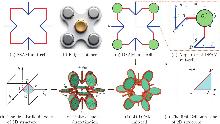
Fig. 1
(a) SSAM unit-cell, (b) fidget spinner, (c) DFAM unit-cell, (d) a quarter of 2D-DFAM unit-cell, (e) the first Brillouin zone of 2D structure, (f) 3D-DFAM unit-cell, (g) finite element discretization, and (h) the first Brillouin zone of 3D structure (color online)"
Table 1
Typical geometric parameters of the DFAM unit-cell"
| Parameter | a/mm | m/mm | n/mm | p/mm | θ/deg | t/mm | t1/mm | r/mm |
|---|---|---|---|---|---|---|---|---|
| Value | 80 | 16 | 8 | 16 | 65 | 0.5 | 0.5 | 12 |
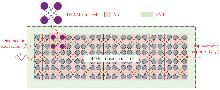
Fig. 2
Schematic of the DFAM unit-cell finite structure subjected to a specified displacement in the x-direction (color online)"
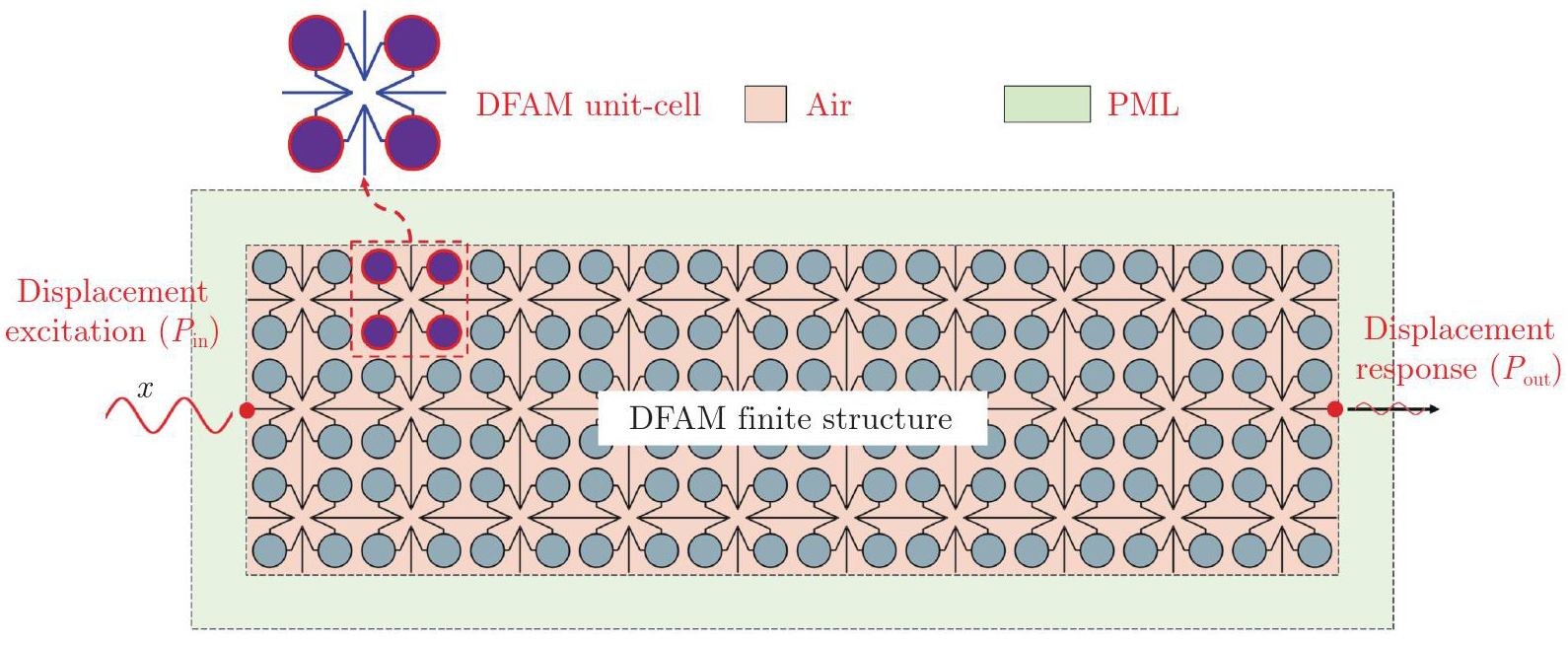
Fig. 3
Diagram of the experimental setup (color online)"
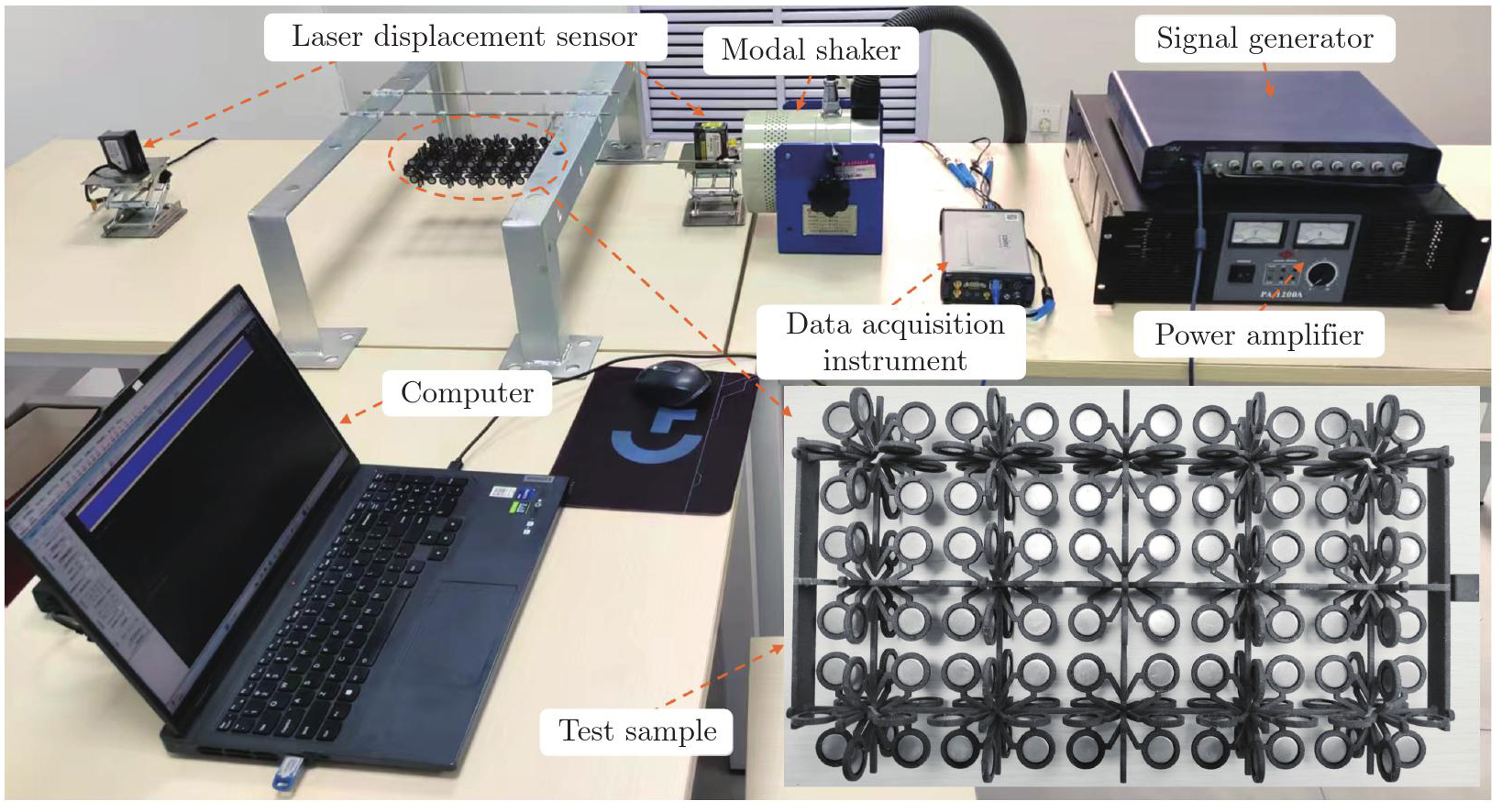
Fig. 4
(a) Partial enlargement of the bandgap details for the DFAM structure in the range of 0–30 Hz, (b) bandgap characteristics of the DFAM structure, and (c) transmission loss spectra over the range of 0–1 000 Hz (color online)"
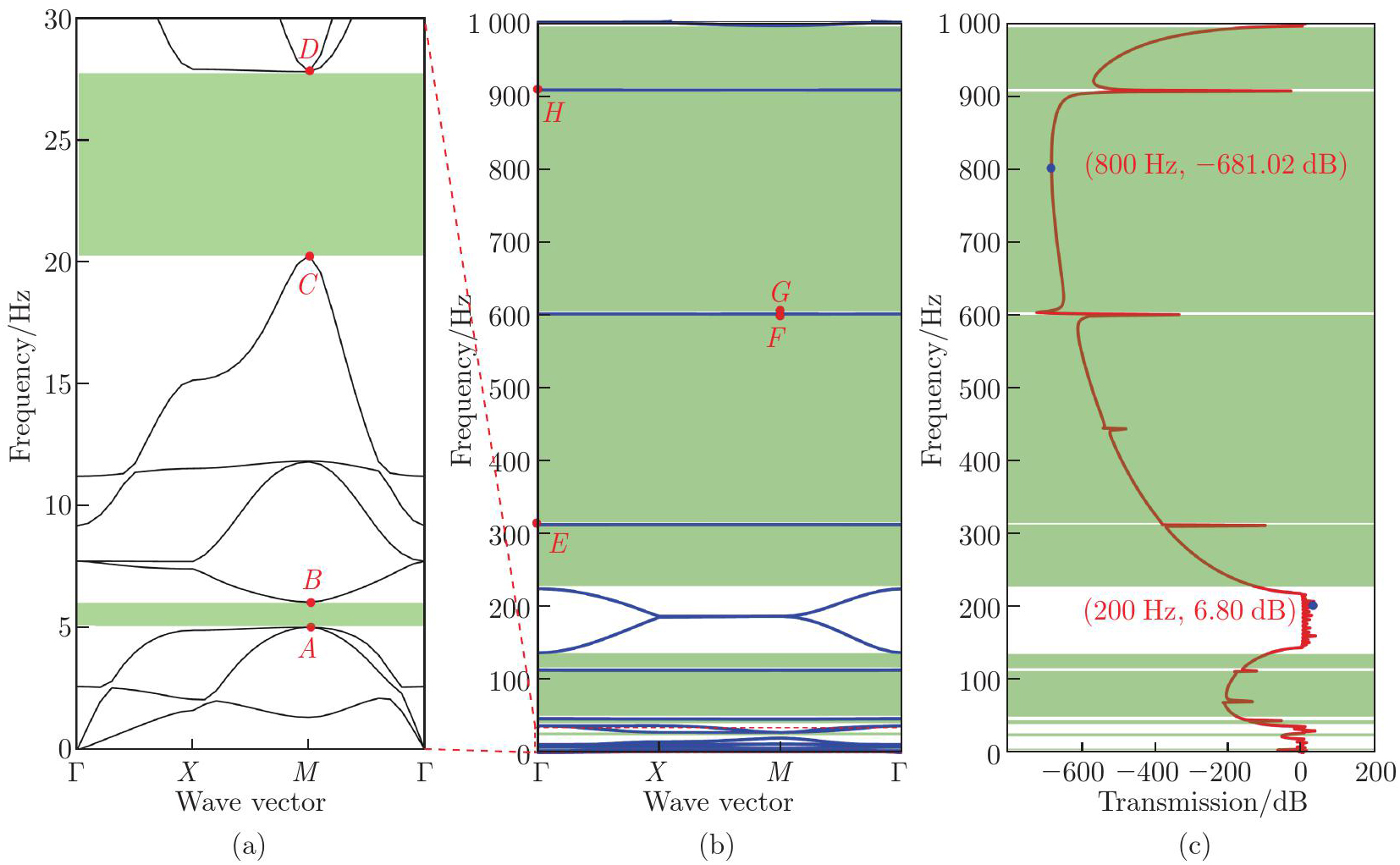
Table 2
Bandgap of DFAM structure in the range of 0–1 000 Hz"
| No. | Bandgap location | Lower boundary/Hz | Upper boundary/Hz | Bandgap wide/Hz |
|---|---|---|---|---|
| 1 | 3rd-4th | 5.03 | 6.05 | 1.02 |
| 2 | 7th-8th | 20.24 | 27.77 | 7.53 |
| 3 | 9th-10th | 37.15 | 45.96 | 8.81 |
| 4 | 10th-11th | 46.59 | 112.74 | 66.15 |
| 5 | 12th-13th | 112.95 | 136.55 | 23.61 |
| 6 | 14th-15th | 224.53 | 312.03 | 87.50 |
| 7 | 16th-17th | 312.12 | 599.68 | 287.56 |
| 8 | 18th-19th | 599.93 | 906.12 | 306.19 |
| 9 | 20th-21st | 906.27 | 994.20 | 87.93 |
Fig. 5
Schematic diagram of the displacement response of the DFAM unit-cell finite structure at specified frequencies: (a) 200 Hz and (b) 800 Hz (color online)"
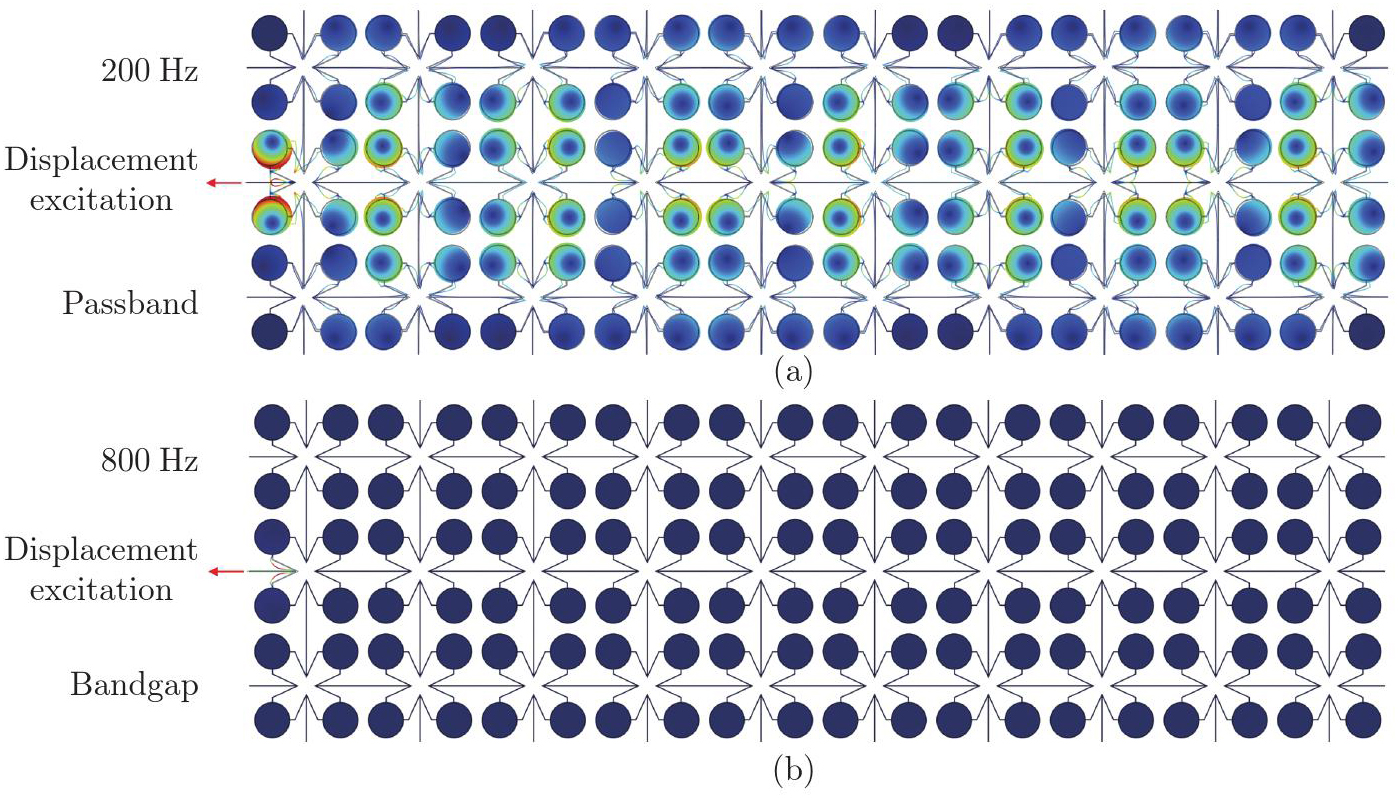
Fig. 6
Representative vibration patterns of the critical points located at the bottom and top boundaries across the four bandgaps shown in Figs. 4(a) and 4(b) (color online)"
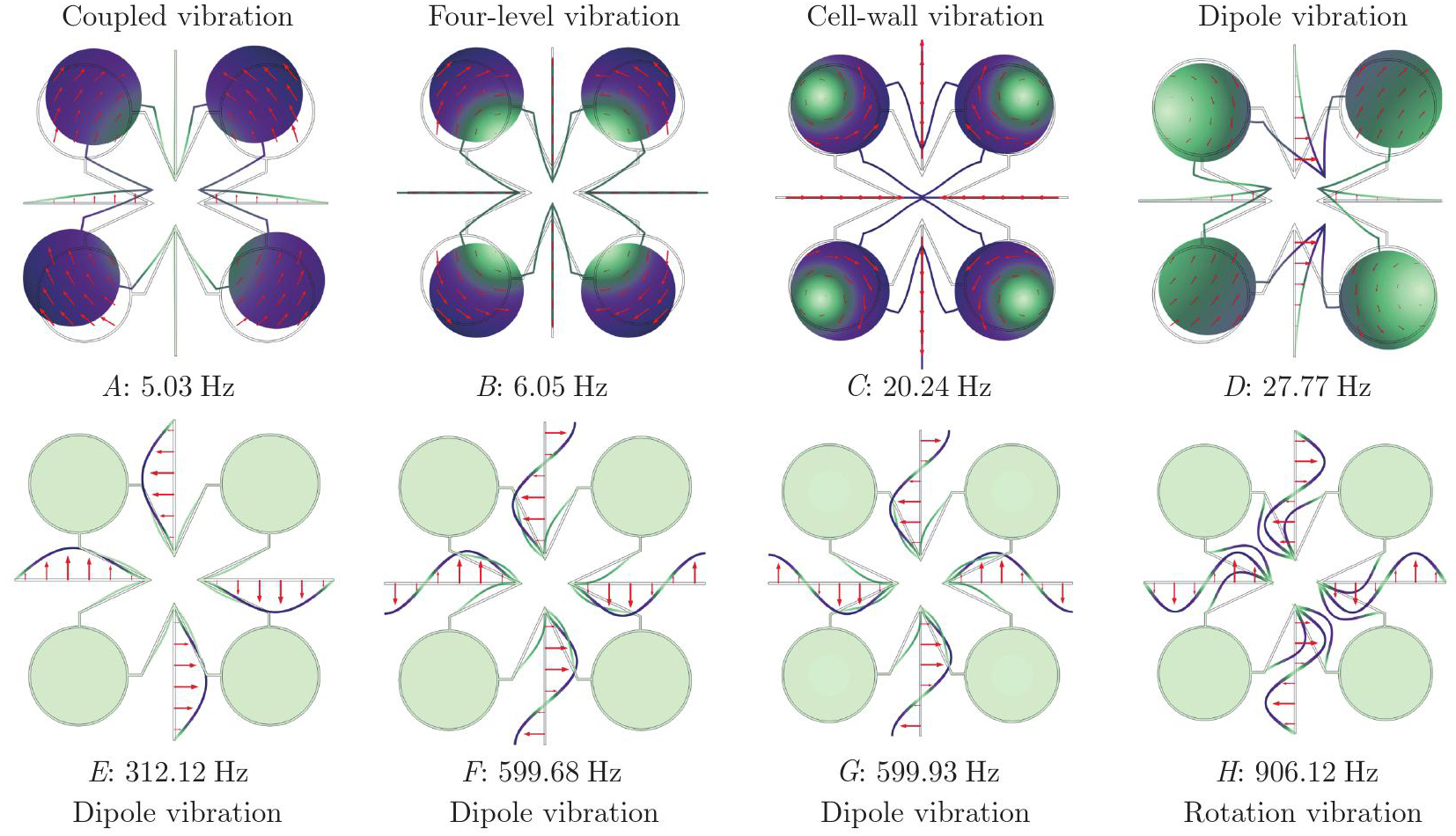
Fig. 7
(a) The eighth 3D dispersion surface, (b) frequency contour distribution, (c) phase velocity (30 Hz, 32 Hz, and 34 Hz), and (d) group velocity (30 Hz, 32 Hz, and 34 Hz) (color online)"
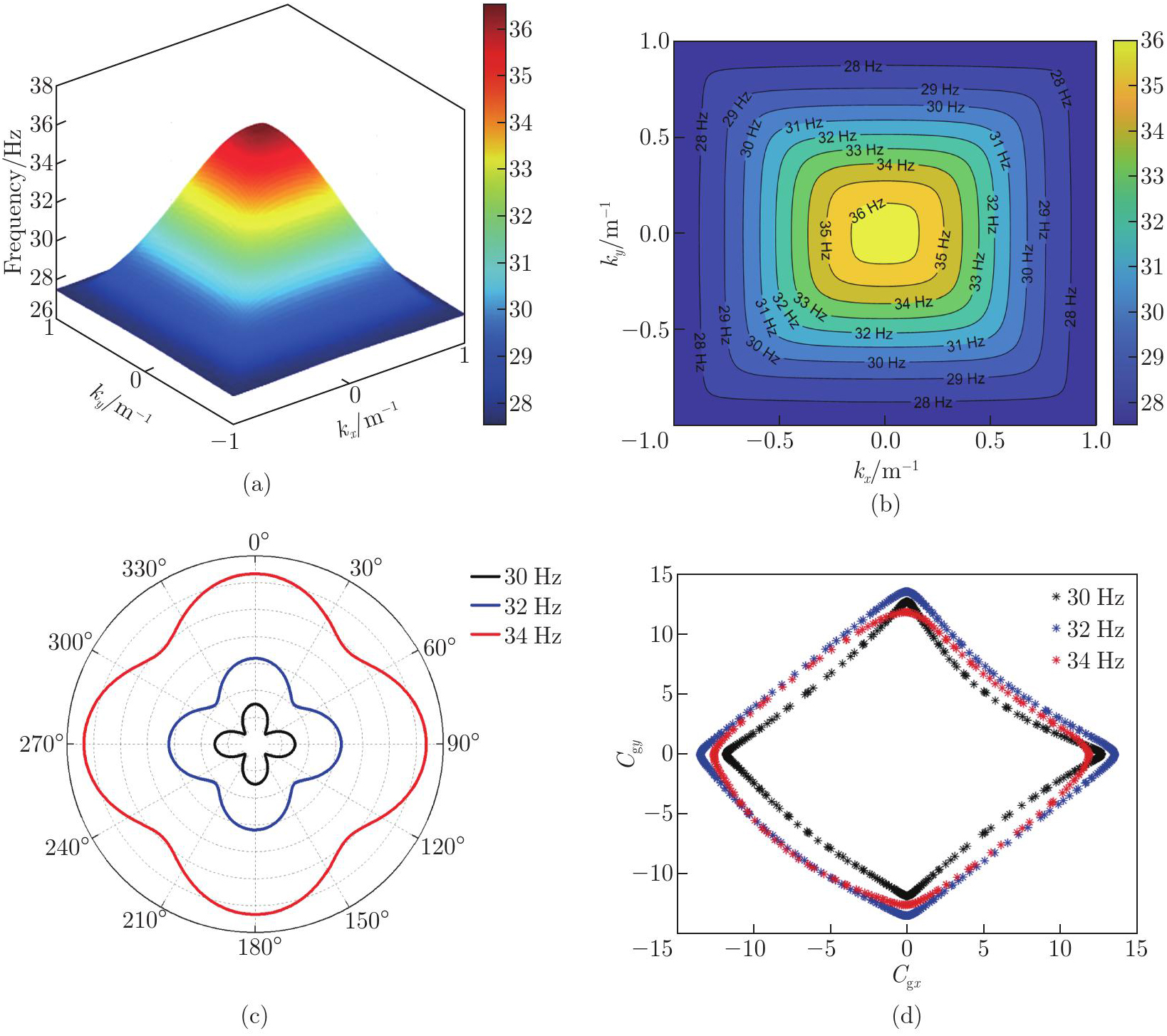
Fig. 8
(a) The thirteenth 3D dispersion surface, (b) frequency contour distribution, (c) phase velocity (135 Hz, 150 Hz, and 165 Hz), and (d) group velocity (135 Hz, 150 Hz, and 165 Hz) (color online)"
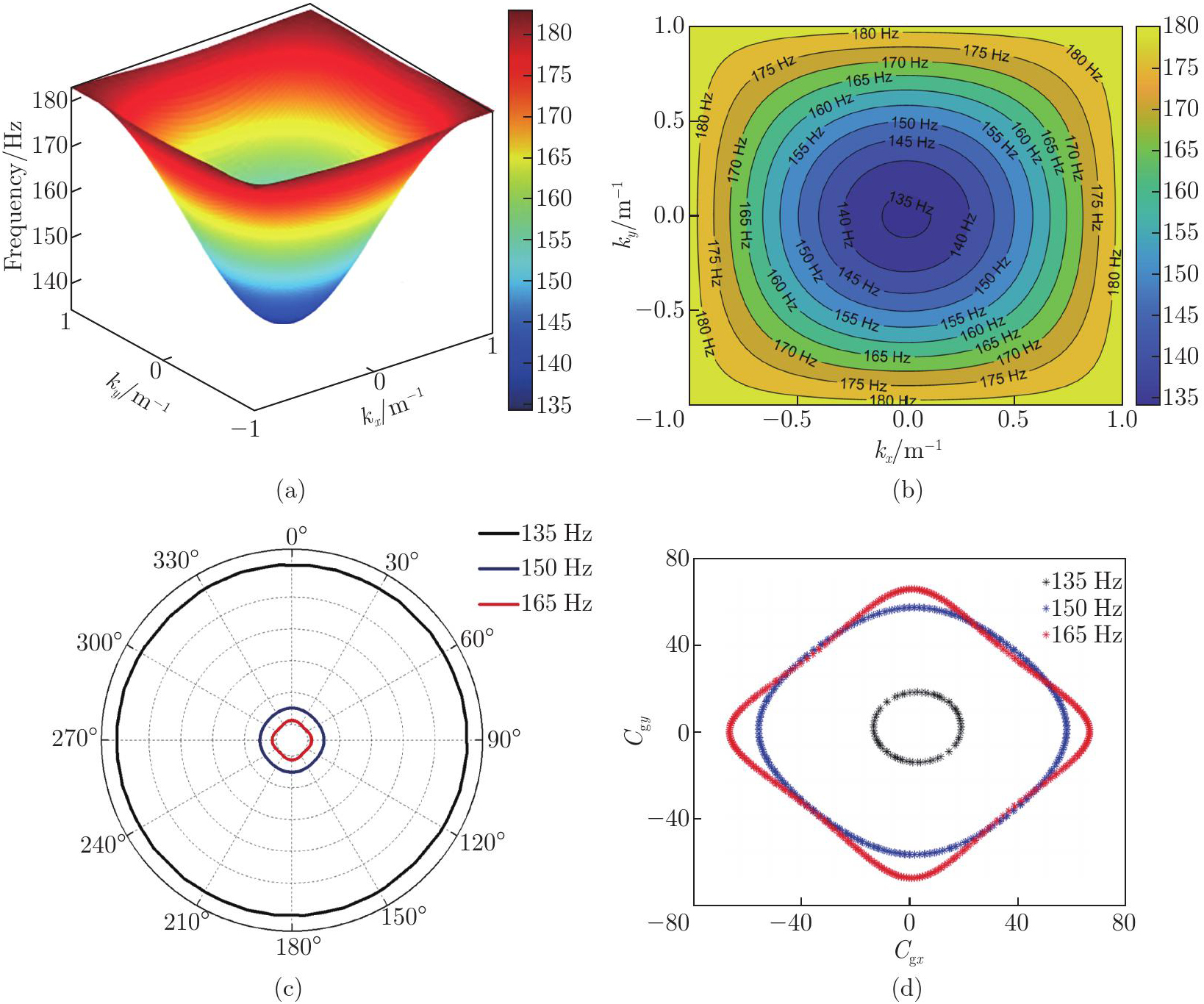
Fig. 9
Bandgap variation of (a) disc material, (b) straight cell-wall length, (c) lattice constant, (d) cell-wall thickness, (e) radius of metal discs, and (f) angle of the DFAM structure (color online)"
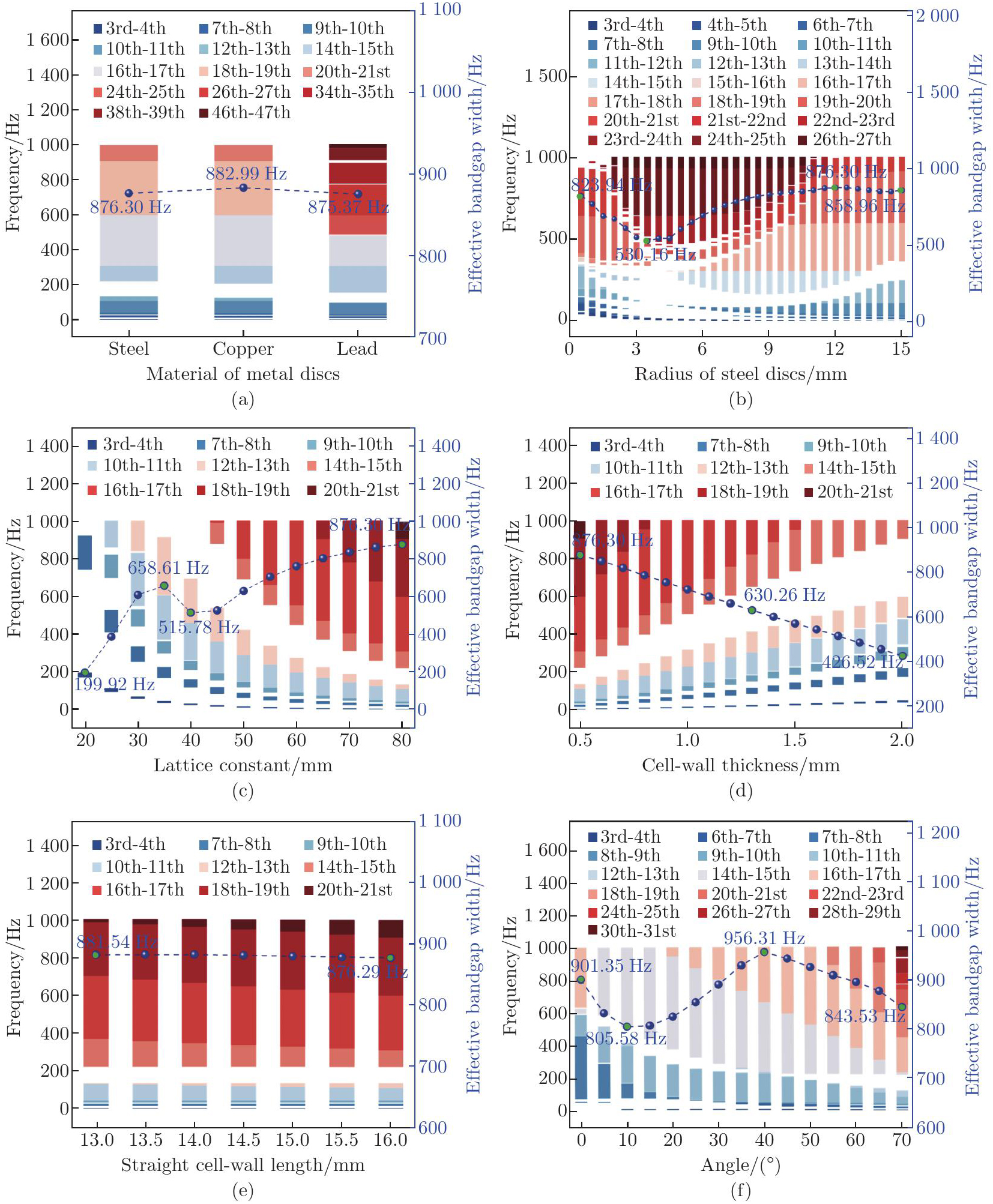
Table 3
Typical geometry parameters of the DFAM lattice"
| Structure | Disc material | a/mm | p/mm | t/mm | r/mm | |
|---|---|---|---|---|---|---|
| DFAM-65-C-12 | Copper | 80 | 16 | 0.5 | 65 | 12 |
| DFAM-65-S-2.5 | Steel | 80 | 16 | 0.5 | 65 | 2.5 |
| DFAM-65-S-1.5 | Steel | 80 | 16 | 0.5 | 65 | 1.5 |
| DFAM-40-S-12 | Steel | 80 | 16 | 0.5 | 40 | 12 |
Fig. 10
(a) Frequency bandgap coverage between 0 Hz and 1 000 Hz for the four DFAM unit-cells, (b) the unit-cell of hybrid metastructure, and (c) the x-direction bandgap of hybrid metastructure (color online)"
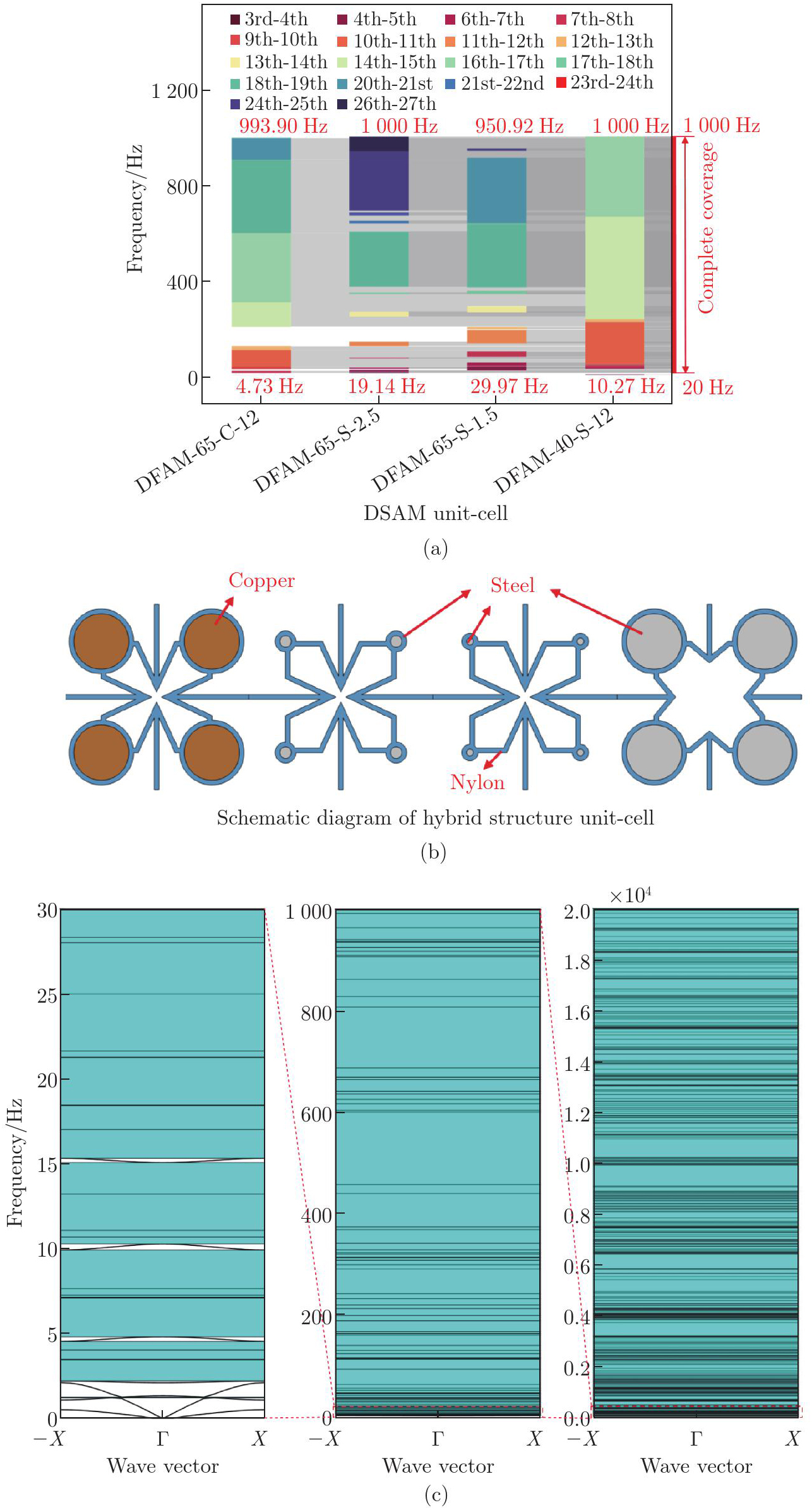
Fig. 11
(a) Schematic design diagram of typical hybrid metastructure and (b) the transmission loss curve of hybrid metastructure (color online)"
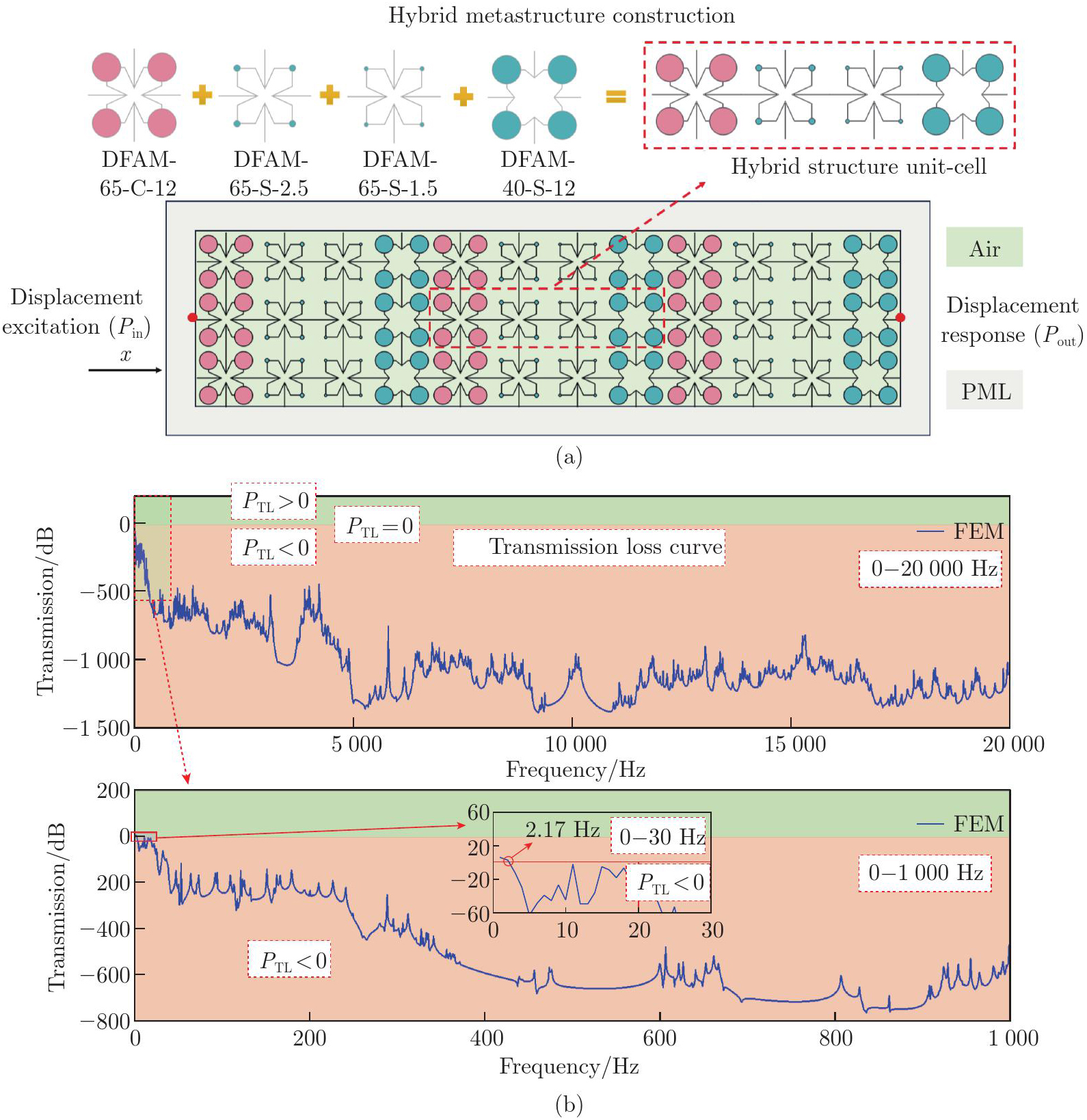
Fig. 12
Bandgap and mode distribution of 3D-DFAM structure (color online)"
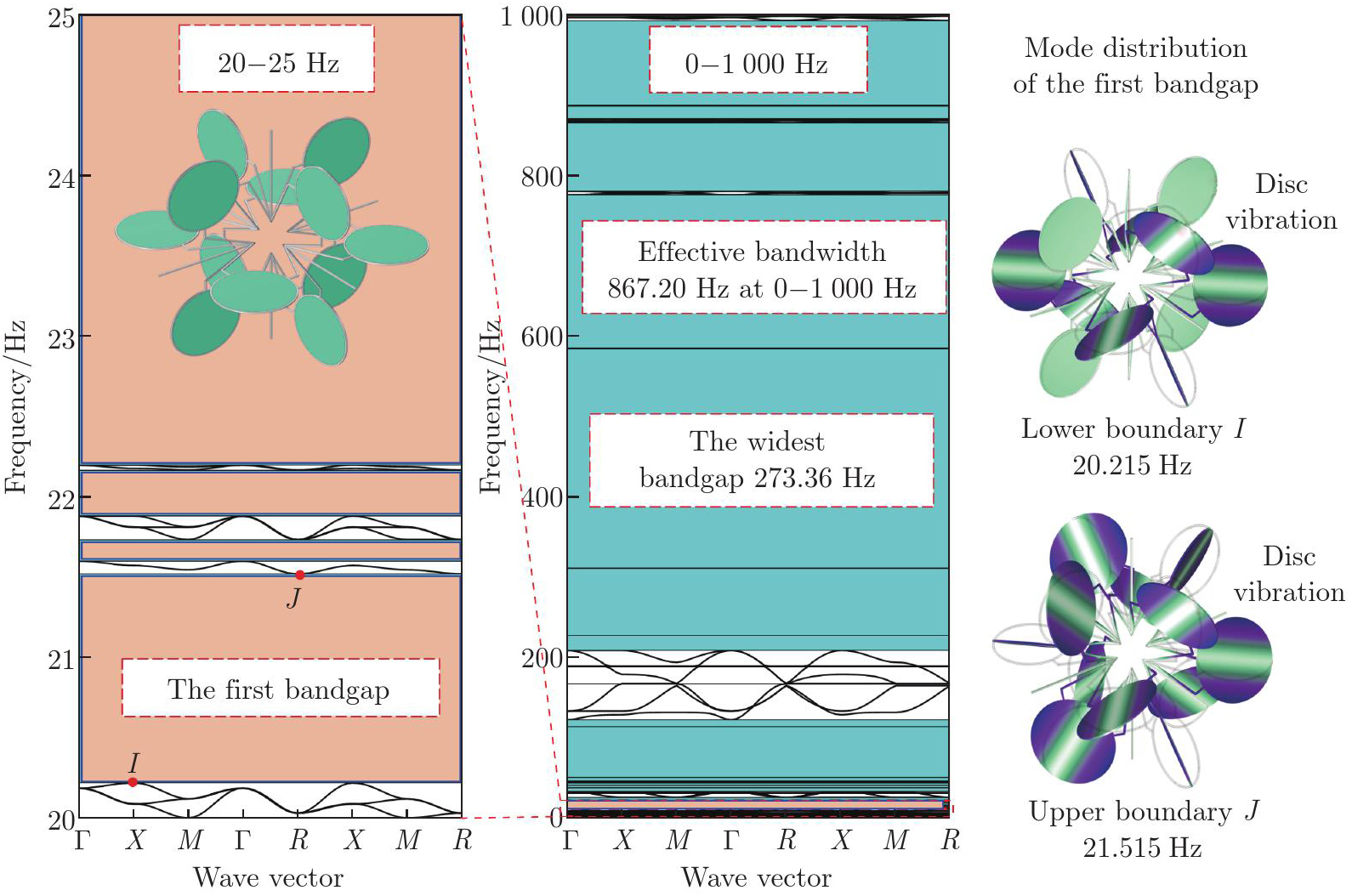
Fig. 13
The bandgap and comparison of corresponding transmission loss spectrum based on the FEM and experiment (color online)"
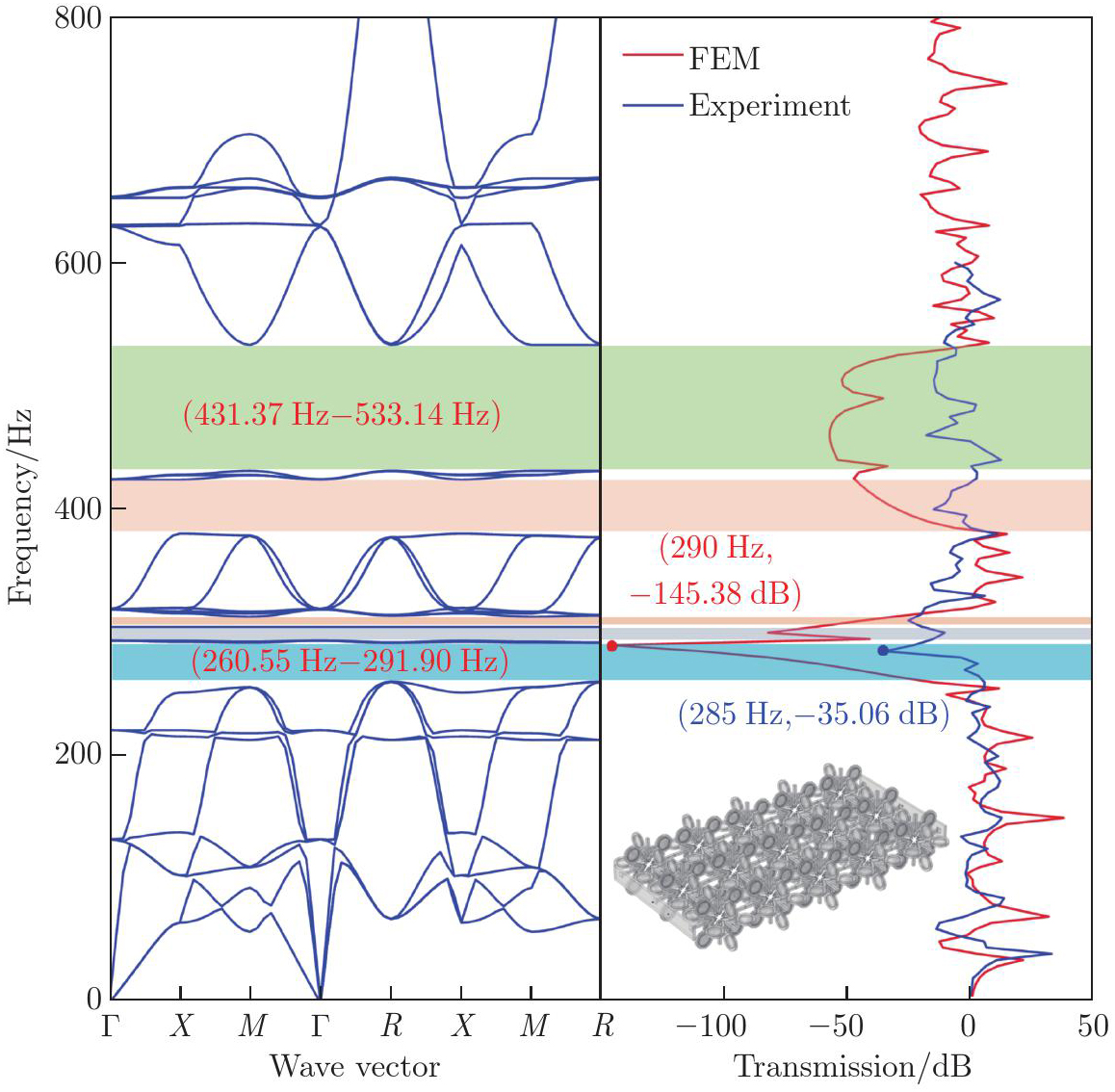
Fig. 14
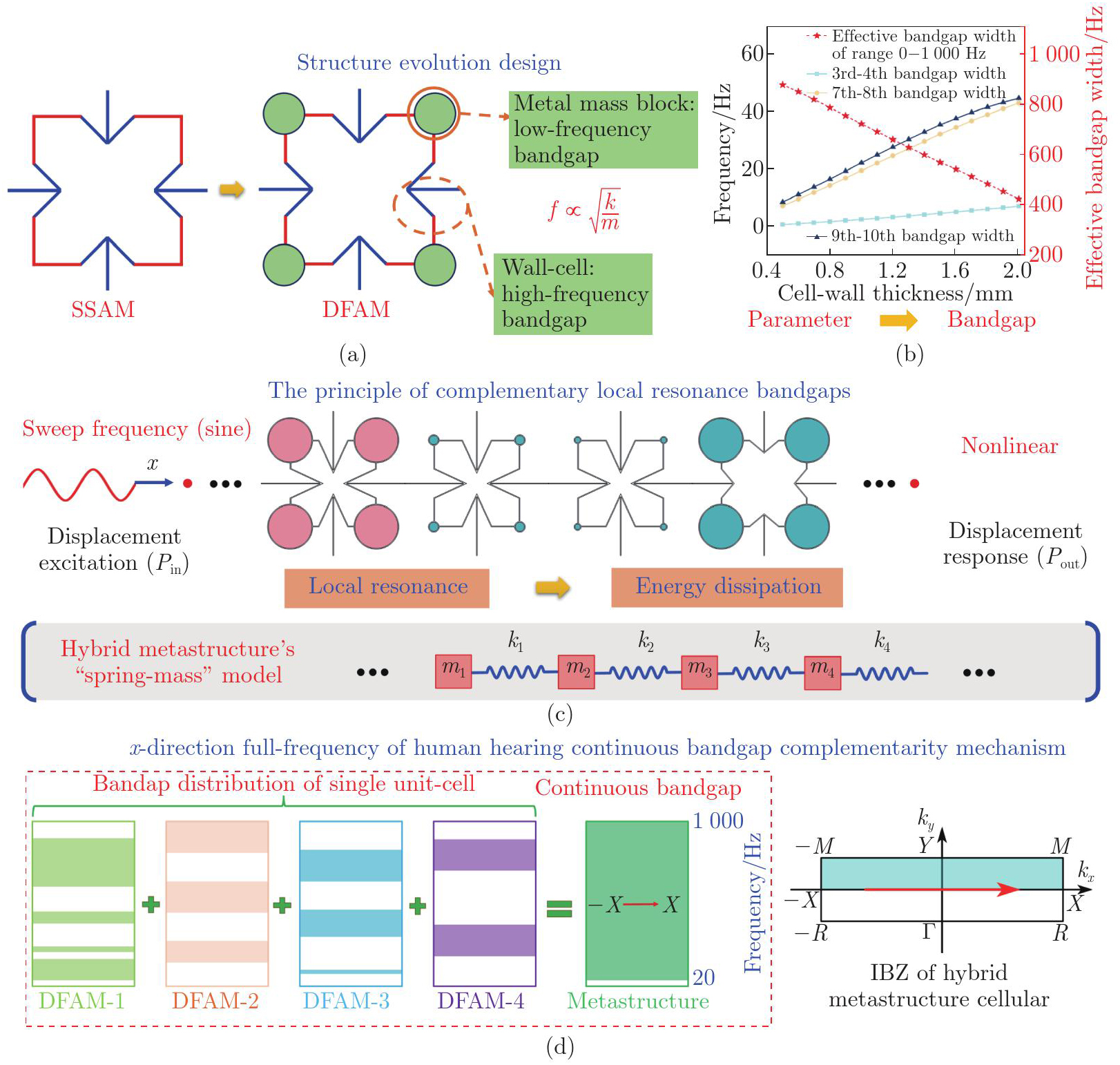
Synergistic design mechanism for continuous bandgap in DFAM (color online)"
| [1] | LU, J. H., DING, S. Q., NI, Y. Q., and LI, S. Bio-inspired acoustic metamaterials for traffic noise control: bridging the gap with machine learning. Communications Engineering, 4, 136 (2025) |
| [2] | COMANDINI, G., OUISSE, M., TING, V. P., and SCARPA, F. Architected acoustic metamaterials: an integrated design perspective. Applied Physics Reviews, 12, 011340 (2025) |
| [3] | ZHANG, J., YAO, D., PENG, W., WANG, R. Q., LI, J., and GUO, S. Y. Optimal design of lightweight acoustic metamaterials for low-frequency noise and vibration control of high-speed train composite floor. Applied Acoustics, 199, 109041 (2022) |
| [4] | WEI, Z. L., SUN, X. F., YANG, F., KE, Z. T., LU, T., ZHANG, P., and SHEN, C. Carriage interior noise-based inspection for rail corrugation on high-speed railway track. Applied Acoustics, 196, 108881 (2022) |
| [5] | LEE, H. M. and LEE, H. P. Low-frequency cabin noise of rapid transit trains. Noise Mapping, 2024, 11, 20220181 (2024) |
| [6] | GARG, S., LIM, K. M., and LEE, H. P. Recording and analyzing carriage noise of various high-speed rail systems using smartphones. Acoustics Australia, 48(1), 121–130 (2020) |
| [7] | LIAO, G. X., LUAN, C. C., WANG, Z. W., LIU, J. P., YAO, X. H., and FU, J. Z. Acoustic metamaterials: a review of theories, structures, fabrication approaches, and applications. Advanced Materials Technologies, 6(5), 2000787 (2021) |
| [8] | CAO, D. X., WANG, L. M., WANG, J. R., GUO, X. Y., and LI, H. T. Design and sound absorption analysis of labyrinthine acoustic metamaterials based on fractal theory. International Journal of Solids and Structures, 306, 113121 (2025) |
| [9] | RUAN, Y. D., LIANG, X., HUA, X. Y., ZHANG, C., XIA, H., and LI, C. Isolating low-frequency vibration from power systems on a ship using spiral phononic crystals. Ocean Engineering, 225, 108804 (2021) |
| [10] | GAO, H. Q., YAN, Q., LIU, X. S., ZHANG, Y., SUN Y. T., DING, Q., WANG, L., XU, J. X., and YAN, H. Low-frequency bandgaps of the lightweight single-phase acoustic metamaterials with locally resonant archimedean spirals. Materials, 15(1), 373 (2022) |
| [11] | WANG, X. X. and FU, T. A novel arc-type auxetic cellular doubly-curved shells with negative Poisson’s ratio for broadband low-frequency sound insulation. European Journal of Mechanics-A/Solids, 106, 105326 (2024) |
| [12] | CAI, T., HUANG, S., GUO, H., YUAN, T., SUN, P., and LIU, N. N. Sound insulation performance of membrane-type acoustic metamaterial based on defect state structure. Physica Scripta, 99(2), 025967 (2024) |
| [13] | LIU, Z. Y., ZHANG, X. X., MAO, Y. W., ZHU, Y. Y., YANG, Z. Y., CHAN, C. T., and SHENG, P. Locally resonant sonic materials. Science, 289, 1734–1736 (2000) |
| [14] | ZHANG, X. P., LI, Y., WANG, Y. G., and LUO, Y. J. Ultra-wide low-frequency bandgap design of acoustic metamaterial via multi-material topology optimization. Composite Structures, 306, 116584 (2023) |
| [15] | ZHANG, S. L., LOU, J., FAN, H., and DU, J. K. A nonlinear acoustic metamaterial beam with tunable flexural wave band gaps. Engineering Structures, 276, 115379 (2023) |
| [16] | MEIER, T., KORAKIS, V., BLANKENSHIP, B. W., LU, H. T., KYRIAKOU, E., PAPAMAKARIOS, S., VANGELATOS, Z., YILDIZDAG, M. E., ZYLA, G., XIA, X. X., ZHENG, X. Y., RHO, Y., FARSARI, M., and GRIGOROPOULOS, C. P. Scalable phononic metamaterials: tunable bandgap design and multi-scale experimental validation. Materials & Design, 252, 113778 (2025) |
| [17] | LI, S. J., HAN, S. H., ZHENG, H. K., HAN, Q., and LI, C. L. Hierarchical design and vibration suppression of the hexachiral hybrid acoustic metamaterial. Applied Acoustics, 224, 110145 (2024) |
| [18] | SUN, P., GUO, H., JIN, F. H., ZHANG, Z. D., LIU, N. N., YUAN, T., MA, L. F., and WANG, Y. S. Mechanics and extreme low-frequency band gaps of auxetic hexachiral acoustic metamaterial with internal resonant unit. Applied Acoustics, 200, 109046 (2022) |
| [19] | YANG, H. Y., CHENG, S. L., LI, X. F., YAN, Q., WANG, B., XIN, Y. J., SUN, Y. T., DING, Q., YAN, H., LI, Y. J., and ZHAO, Q. X. Study on bandgap and vibration attenuation mechanism of novel chiral lattices. Physica B: Condensed Matter, 651, 414596 (2023) |
| [20] | HOU, J. H., LI, D., ZHANG, Z. J., RUAN, H. F., and LIU, H. C. Bandgap enhancement of two-dimensional lattice metamaterial via re-entrant hierarchy. Smart Materials and Structures, 31(9), 095012 (2022) |
| [21] | LI, C. L., SUN, Y., HAN, Q., and JIANG, T. J. Bandgap tunability and impact mitigation enhancement of hybrid graded origami-inspired metamaterials with multiple resonators. Thin-Walled Structures, 202, 112137 (2024) |
| [22] | RUAN, H. F. and LI, D. Band gap characteristics of bionic acoustic metamaterials based on spider web. Engineering Structures, 308, 118003 (2024) |
| [23] | KUMAR, N. and PAL, S. Low frequency and wide band gap metamaterial with divergent shaped star units: numerical and experimental investigations. Applied Physics Letters, 115(25), 254101 (2019) |
| [24] | HOSSEINKHANI, A., PANAHI, E., KHANSANAMI, M. F., and YOUNESIAN, D. A modified star-shaped phononic crystal for the vibration wave filtration in plates: design and experiment. Archive of Applied Mechanics, 93(8), 3153–3169(2023) |
| [25] | DONG, X. J., WANG, S., WANG, A. S., WANG, L., ZHANG, Z. Z., TIE, Y. H., LIN, Q. Y., and SUN, Y. T. Low-frequency bandgap and vibration suppression mechanism of a novel square hierarchical honeycomb metamaterial. Applied Mathematics and Mechanics (English Edition), 45(10), 1841–1856 (2024) https://doi.org/10.1007/s10483-024-3168-7 |
| [26] | TAJSHAM, A., YOUNESIAN, D., GOODINI, J., and HOSSEINKHANI, A. A new polyhedral sonic crystal for broadband sound barriers: optimization and experimental study. Applied Acoustics, 218, 109881 (2024) |
| [27] | KUDELA, P., IJJEH, A., RADZIENSKI, M., MINIACI, M., PUGNO, N., and OSTACHOWICZ, W. Deep learning aided topology optimization of phononic crystals. Mechanical Systems and Signal Processing, 200, 110636 (2023) |
| [28] | ZHANG, K., GUO, Y. Y., LIU, X. B., HONG, F., HOU, X. H., and DENG, Z. C. Deep learning-based inverse design of lattice metamaterials for tuning bandgap. Extreme Mechanics Letters, 69, 102165 (2024) |
| [29] | JIANG, W. F., ZHU, Y. Y., YIN, G. F., LU, H. H., XIE, L. F., and YIN, M. Dispersion relation prediction and structure inverse design of elastic metamaterials via deep learning. Materials Today Physics, 22, 100616 (2022) |
| [30] | JIA, Z. Y., BAO, Y. H., LUO, Y. J., WANG, D. Z., ZHANG, X. P., and KANG, Z. Maximizing acoustic band gap in phononic crystals via topology optimization. International Journal of Mechanical Sciences, 270, 109107 (2024) |
| [31] | WANG, H., CHENG, S. L., WANG, C., SUN, Y. T., and XIN, Y. J. Tunable band gaps and double-negative properties of innovative acoustic metamaterials. Applied Physics A, 127(7), 495 (2021) |
| [32] | ZHAO, R., ZHENG, J., GUO, J., SHI, Y. B., FENG, H. Z., TANG, J., and LIU, J. Suppression of low-frequency ultrasound broadband vibration using star-shaped single-phase metamaterials. Defence Technology, 34, 217–224 (2024) |
| [33] | LIU, M. H., LI, X. Y., ZOU, X. Y., and CHENG, J. C. Broadband acoustic insulation via gradient impedance boundary waveguide. Applied Physics Letters, 120, 123501 (2022) |
| [34] | YANG, F., MA, Z. Y., and GUO, X. M. Bandgap characteristics analysis and graded design of a novel metamaterial for flexural wave suppression. Applied Mathematics and Mechanics (English Edition), 46(1), 1–24 (2025) https://doi.org/10.1007/s10483-025-3204-7 |
| [35] | CAI, C. Q., ZHU, C. J., ZHANG, F. Y., SUN, J. J., WANG, K., YAN, B., and ZHOU, J. X. Modeling and analysis of gradient metamaterials for broad fusion bandgaps. Applied Mathematics and Mechanics (English Edition), 45(7), 1155–1170 (2024) https://doi.org/10.1007/s10483-024-3154-6 |
| [36] | TANG, Y. F., REN, S. W., MENG, H., XIN, F. X., HUANG, L. X., CHEN, T. N., ZHANG, C. Z., and LU, T. J. Hybrid acoustic metamaterial as super absorber for broadband low-frequency sound. Scientific Reports, 7(1), 43340 (2017) |
| [37] | GUO, D. X., ZHANG, X. L., TIAN, R. L., and CHEN, L. Q. Low-frequency bandgap broadening of single-phase shuriken-like acoustic metastructure through coupling design for sound insulation. Applied Acoustics, 236, 110725 (2025) |
| [38] | BARAVELLI, E. and RUZZENE, M. Internally resonating lattices for bandgap generation and low-frequency vibration control. Journal of Sound and Vibration, 332(25), 6562–6579 (2013) |
| [39] | CHENG, S. L., LI, X. F., WANG, Y. L., WANG, B., SUN, Y. T., YAN, Q., DING, Q., and XIN, Y. J. Multi-frequency band gap and active frequency modulation of snowflake-like convex horn ligament structure. European Journal of Mechanics-A/Solids, 97, 104843 (2023) |
| [40] | XIN, Y. J., CAI, P. C., LI, P., QUN, Y., SUN, Y. T., QIAN, D., CHENG, S. L., and ZHAO, Q. X. Comprehensive analysis of band gap of phononic crystal structure and objective optimization based on genetic algorithm. Physica B: Condensed Matter, 667, 415157 (2023) |
| [41] | YONG, J. W., LI, W. T., HU, X. J., WAN, Z. S., DONG, Y. Y., and FENG, N. L. Co-design of mechanical and vibration properties of a star polygon-coupled honeycomb metamaterial. Applied Sciences, 14(3), 1028 (2024) |
| [42] | HAGHPANAH, B., EBRAHIMI, H., MOUSANEZHAD, D., HOPKINS, J., and VAZIRI, A. Programmable elastic metamaterials. Advanced Engineering Materials, 18(4), 643–649 (2015) |
| [43] | LAI, Y., WU, Y., SHENG, P., and ZHANG, Z. Q. Hybrid elastic solids. Nature Materials, 10(8), 620–624 (2011) |
| [44] | LIU, Z. Y., CHAN, C. T., and SHENG, P. Analytic model of phononic crystals with local resonances. Physical Review B, 71, 014103 (2005) |
| [45] | WU, Y., LAI, Y., and ZHANG, Z. Q. Effective medium theory for elastic metamaterials in two dimensions. Physical Review B, 76, 205313 (2007) |
| [46] | LI, Y. L., WANG, Y., and YAO, S. Multipolar resonance and bandgap formation mechanism of star-shaped lattice structure. International Journal of Mechanical Sciences, 193, 106163 (2021) |
| [47] | CHEN, M., XU, W. S., LIU, Y., YAN, K., JIANG, H., and WANG, Y. R. Band gap and double-negative properties of a star-structured sonic metamaterial. Applied Acoustics, 139, 235–242 (2018) |
| [48] | CHENG, S. L., LI, X. F., YAN, Q., WANG, B., SUN, Y. T., XIN, Y. J., DING, Q., YAN, H., and LI, Y. J. Low frequency band gap and wave propagation mechanism of resonant hammer circular structure. Mechanics of Advanced Materials and Structures, 31(20), 4818–4838 (2023) |
| [49] | ZHANG, J., YAO, D., PENG, W., WANG, R. Q., LI, J., and GUO, S. Y. Optimal design of lightweight acoustic metamaterials for low-frequency noise and vibration control of high-speed train composite floor. Applied Acoustics, 199, 109041 (2022) |
| [1] | Fan YANG, Zhaoyang MA, Xingming GUO. Bandgap characteristics analysis and graded design of a novel metamaterial for flexural wave suppression [J]. Applied Mathematics and Mechanics (English Edition), 2025, 46(1): 1-24. |
| [2] | Changqi CAI, Chenjie ZHU, Fengyi ZHANG, Jiaojiao SUN, Kai WANG, Bo YAN, Jiaxi ZHOU. Modeling and analysis of gradient metamaterials for broad fusion bandgaps [J]. Applied Mathematics and Mechanics (English Edition), 2024, 45(7): 1155-1170. |
| [3] | Donghai HAN, Qi JIA, Yuanyu GAO, Qiduo JIN, Xin FANG, Jihong WEN, Dianlong YU. Local resonance metamaterial-based integrated design for suppressing longitudinal and transverse waves in fluid-conveying pipes [J]. Applied Mathematics and Mechanics (English Edition), 2024, 45(10): 1821-1840. |
| [4] | Jianing LIU, Jinqiang LI, Ying WU. Bandgap adjustment of a sandwich-like acoustic metamaterial plate with a frequency-displacement feedback control method [J]. Applied Mathematics and Mechanics (English Edition), 2024, 45(10): 1807-1820. |
| [5] | Chenxu QIANG, Yuxin HAO, Wei ZHANG, Jinqiang LI, Shaowu YANG, Yuteng CAO. Bandgaps and vibration isolation of local resonance sandwich-like plate with simply supported overhanging beam [J]. Applied Mathematics and Mechanics (English Edition), 2021, 42(11): 1555-1570. |
| Viewed | ||||||
|
Full text |
|
|||||
|
Abstract |
|
|||||





 Email Alert
 RSS
RSS